Weber vs Traeger Pellet Grills: I Cook on Both, Here Is My Honest Pick
Weber vs Traeger after cooking on both lineups: the Searwood XL wins on searing, startup, and a free app. Traeger wins on lineup depth, dealer network, and a 10-year warranty. Real numbers inside.
 By Oleg Galeev, cooking on pellet grills since 2020, runs the OleGrill YouTube channel
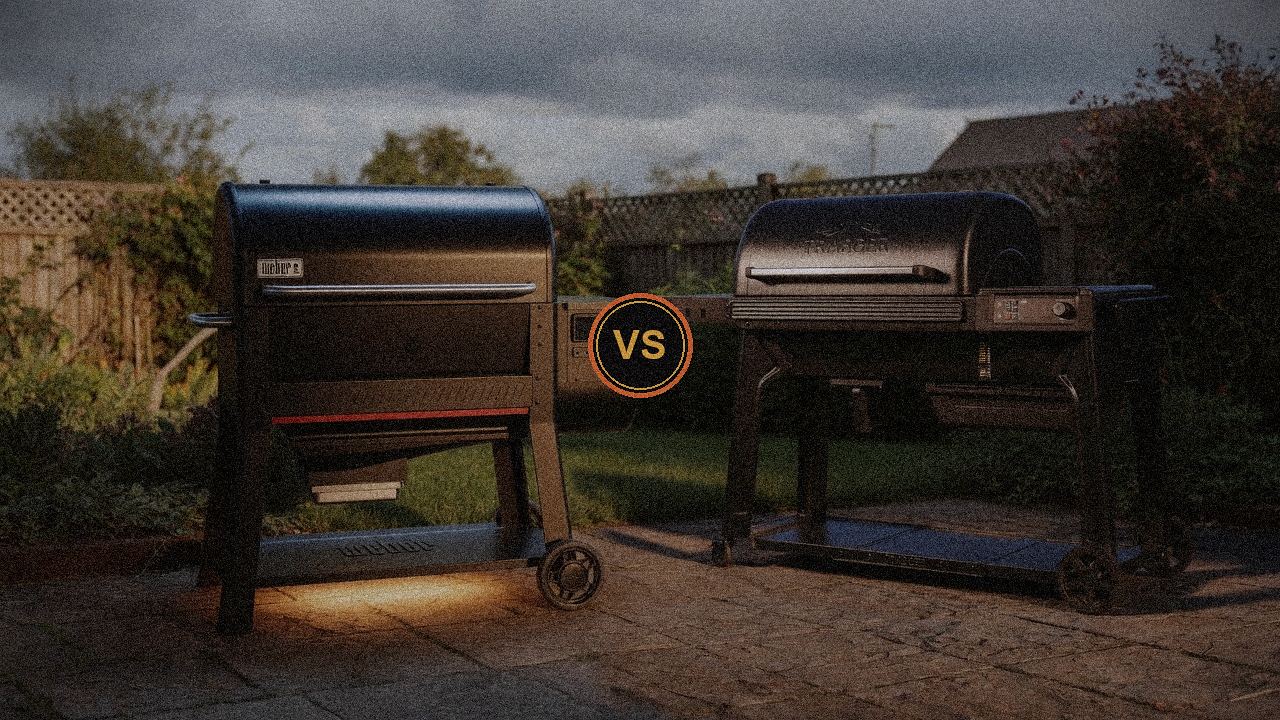
Short answer
Weber wins this matchup. The Searwood XL sears over live flame, starts fast, and runs a subscription-free app, and it scores 7.9 in our testing. Buy a Traeger if you want a grill at every price point, the most mature app ecosystem, a 10-year warranty, and a dealer in every town.
Live prices. Affiliate links: we may earn a commission at no extra cost to you. How this works.
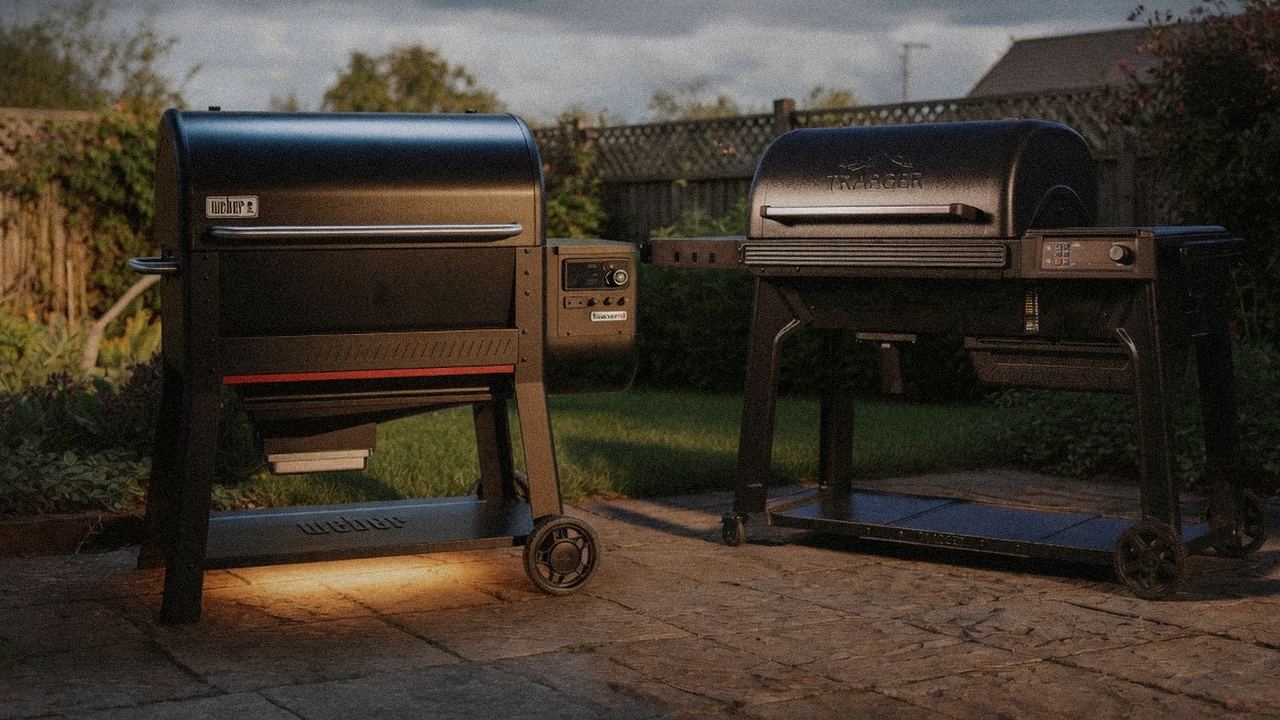
Last month I had the Searwood XL and a Traeger Woodridge Pro parked side by side on my patio, both loaded with the same hickory pellets, both holding 250°F with briskets on. Standing between them at 6 a.m. with coffee, you would call it a tie. Two steady temps, two thin streams of smoke, two apps quietly graphing along. The gap showed up eleven hours later, when I wanted to crust the burnt ends. One grill opened a panel to live flame. The other one asked me to go find my cast iron. It is one of the matchups behind the best wood pellet grills rankings on this site.
That is this comparison in one scene. Weber and Traeger have converged on the low-and-slow part of the job. They split hard on everything around it: searing, startup behavior, app philosophy, warranty, and how many models deep the catalog goes.
Pull temps still follow the USDA safe minimum internal temperatures for poultry, pork, and ground beef, no matter which hopper you bought.
Warranty language is what Traeger's warranty page actually publishes, not a forum guess.
How do Weber and Traeger compare at a glance?
Weber sells two pellet grills, both hot and sear-capable: the Searwood 600 at $999 and the Searwood XL at $1,299, both hitting 600°F with direct flame. Traeger sells a full ladder from the $900 Woodridge up past the $1,800 Woodridge Elite, all capped at 500°F, none with direct-flame searing.
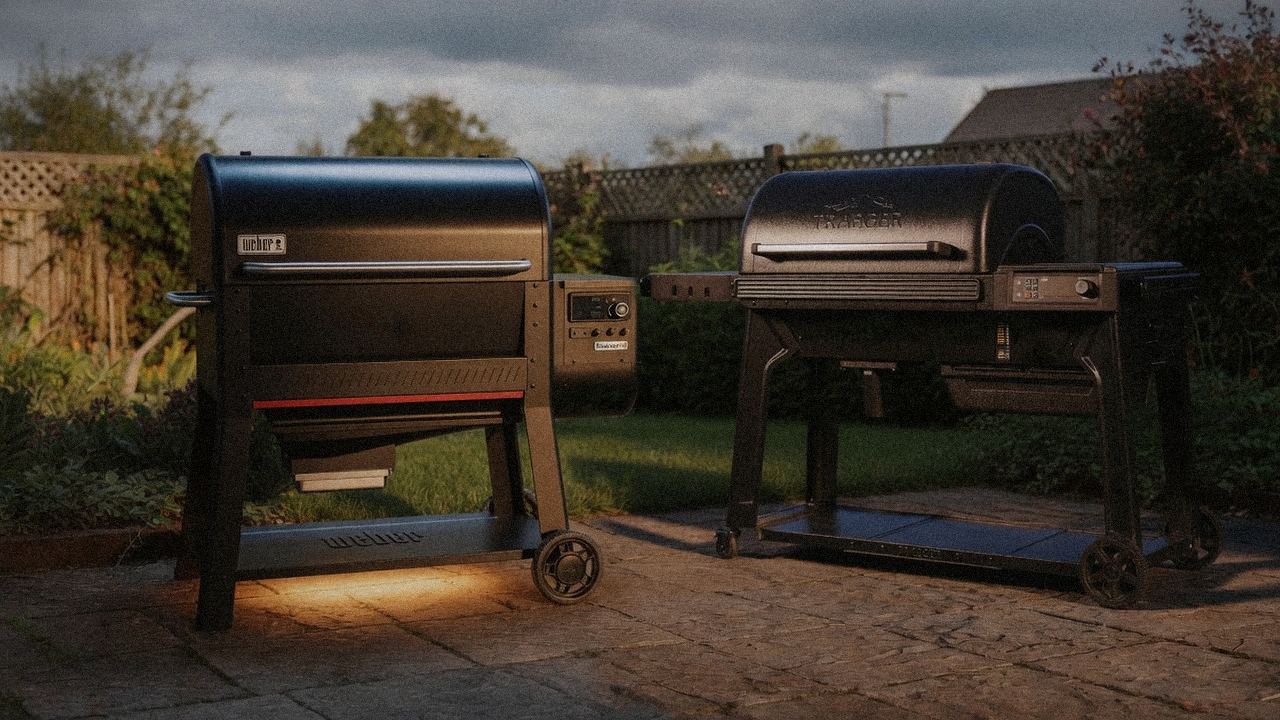
Here are the two most comparable machines, the ones I would actually cross-shop, next to the small Weber:
| Spec | Weber Searwood XL 600 | Traeger Woodridge Pro | Weber Searwood 600 |
|---|---|---|---|
| Price | $1,299 | $1,178 | $999 |
| Cooking area | 972 sq in | 970 sq in | 648 sq in |
| Hopper | 20 lb | 24 lb | 20 lb |
| Max temp | 600°F | 500°F | 600°F |
| WiFi | Yes | Yes | Yes |
| Direct sear | Yes | No | Yes |
| Warranty | 5 years | 10 years | 5 years |
Read that middle column honestly and Traeger is not embarrassed. The Woodridge Pro gives you essentially the same cooking area as the XL for $121 less, a bigger hopper, and double the warranty. What it cannot give you is the last 100 degrees or a flame under the meat, and for me that is where the money is. If you are deciding between the two Webers instead, size is the whole question, and I broke that down in Searwood 600 vs Searwood XL.
Which one actually sears a steak?
Weber, and it is not close. The Searwood XL runs to 600°F and opens direct flame under the grate, earning an 8.3 sear score in my testing. Every current Traeger in this comparison tops out at 500°F with no direct-flame option, so searing means convection color or a cast iron workaround.
A pellet grill is a convection oven that burns wood, and convection air alone browns meat slowly and politely. Politely is not a crust. Weber's answer on both Searwoods is a slide-away panel over the firepot: finish your reverse sear over actual fire, 60 to 90 seconds a side, done. I have put that 8.3 sear score through ribeyes, smash burgers, and thick pork chops, and it holds.
Traeger's spec sheet tells the story from the other side. Woodridge, Woodridge Pro, Ironwood, Ironwood XL, Timberline, Timberline XL, Pro 575: every one lists 500°F max and no sear function. The little Tailgater 20 stops at 450°F. Traeger owners work around it with cast iron on the grate or a separate gas burner, and the workaround works. It is just a workaround on a grill that can cost $1,700 or $1,800.
This is the single biggest reason the Searwood XL sits at number one in our pellet grill rankings. It is the only machine in this matchup that covers both ends of the cook without accessories, and if you want the version of this argument you can taste, check the current price on the Searwood XL before deciding.
Which holds temperature better?
Measured against my probes, the Searwood XL scores 8 on both temperature accuracy and stability, holding set point through wind and lid opens. I have not yet run the Traeger lineup through the same instrumented protocol, so I will not put a Traeger number beside it. Owner reports suggest steady, unremarkable holding.
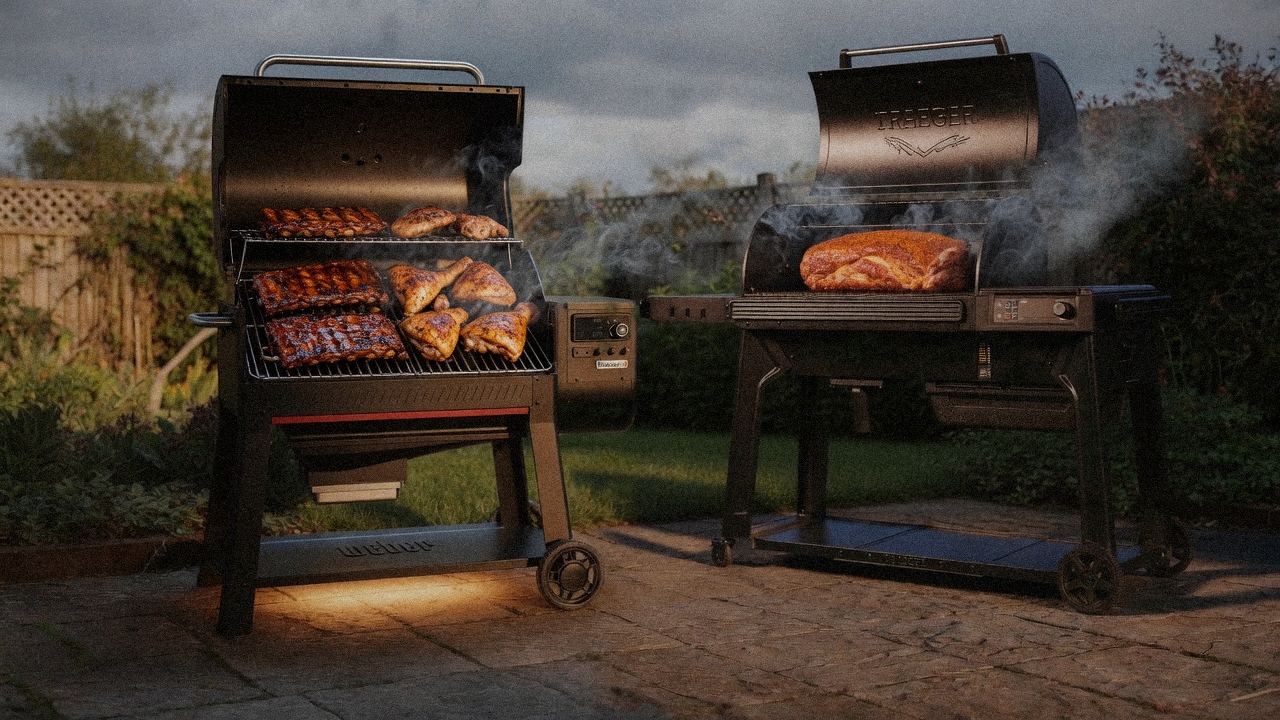
Here is the full measured picture for the grills I have scored, printed as-is:
| Dimension (0-10) | Searwood XL 600 | Searwood 600 | SmokeFire EX4/EX6 (discontinued) |
|---|---|---|---|
| Temp accuracy | 8 | 8 | 6.5 |
| Temp stability | 8 | 8 | 6.5 |
| Smoke flavor | 7.3 | 7.3 | 7 |
| Build quality | 8 | 8 | 7 |
| Sear | 8.3 | 8.3 | 8 |
| Ease of use | 8.7 | 8.7 | 7 |
| Cleaning | 7.3 | 7.3 | 6 |
| App | 8.7 | 8.7 | 7.5 |
| Overall score | 7.9 | 7.9 | 6.8 |
Two honest caveats. First, the Traeger column is missing because the measurements do not exist yet, not because Traeger failed them; those reviews are coming. Second, Weber's numbers are not spotless. Owner forums note occasional pellet flow trouble in cold weather on the Searwoods, and I have seen the E10 error code complaints. Neither has cost me a cook, but a 20-pound hopper also means more overnight refills than Traeger's 24-pounders, which matters at hour ten of a brisket.
Who makes more smoke flavor?
Call it even, leaning slightly Weber on my palate. The Searwoods score 7.3 on smoke, a real but restrained wood flavor. Traeger has no measured score here yet, and Reddit owners of the Woodridge Pro occasionally report less smoke flavor than they expected, a complaint I have heard about most modern pellet grills.
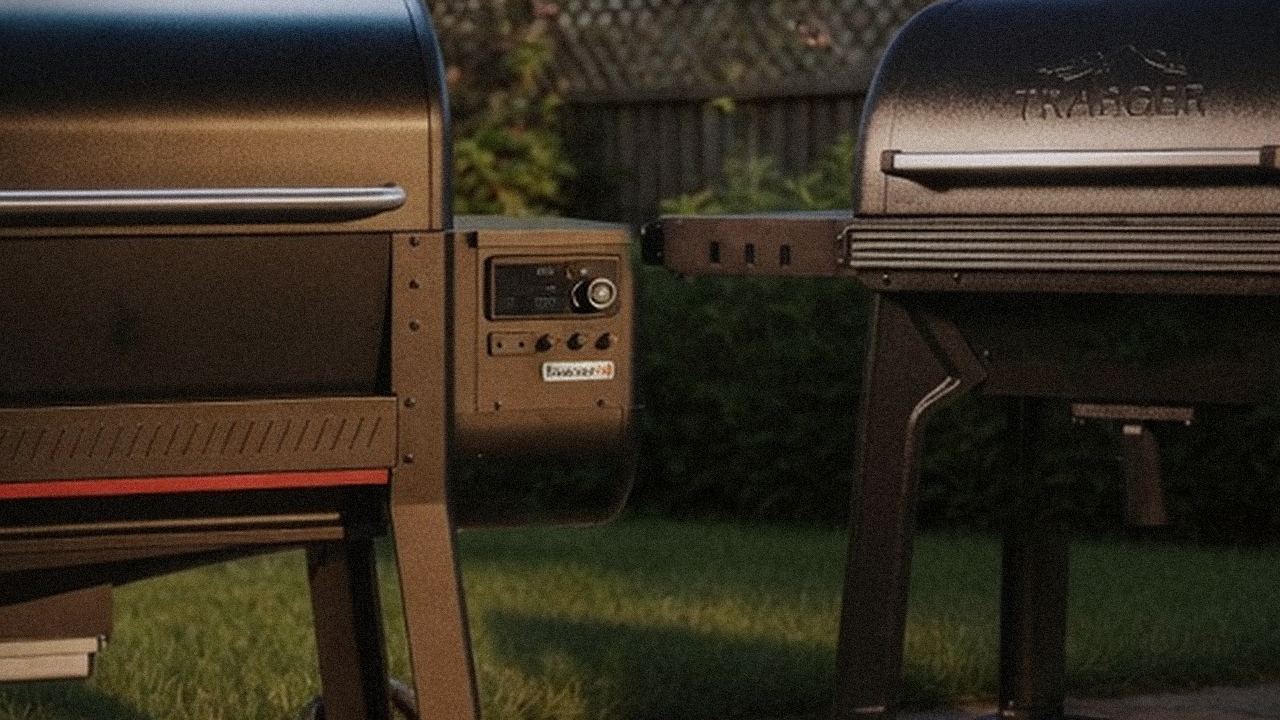
Nobody should buy either brand expecting stick-burner smoke. Modern pellet grills burn clean and efficient, which reads as mild on the plate, and both companies tune for consistency over intensity. The 7.3 I logged for the Searwoods came from bark color and flavor panels across brisket, ribs, and pulled pork, and it is a good score, not a great one. The honest fix on any pellet grill is technique: run the low end of the temp range early, when meat takes smoke best.
If maximum smoke is genuinely your first priority, this may be the wrong matchup entirely. That conversation lives over in recteq vs Traeger, where thicker-bodied competitors make the smoke question far more interesting.
Should Weber's SmokeFire history scare you off?
It should inform you, not scare you. The SmokeFire EX4 and EX6 earned their bad reputation: I scored them 6.8 overall with 6.5s on temperature accuracy and stability, and owners reported flare-ups, auger jams, and inconsistent temps. Weber discontinued them, and the Searwood line is the direct replacement and a genuine redemption.
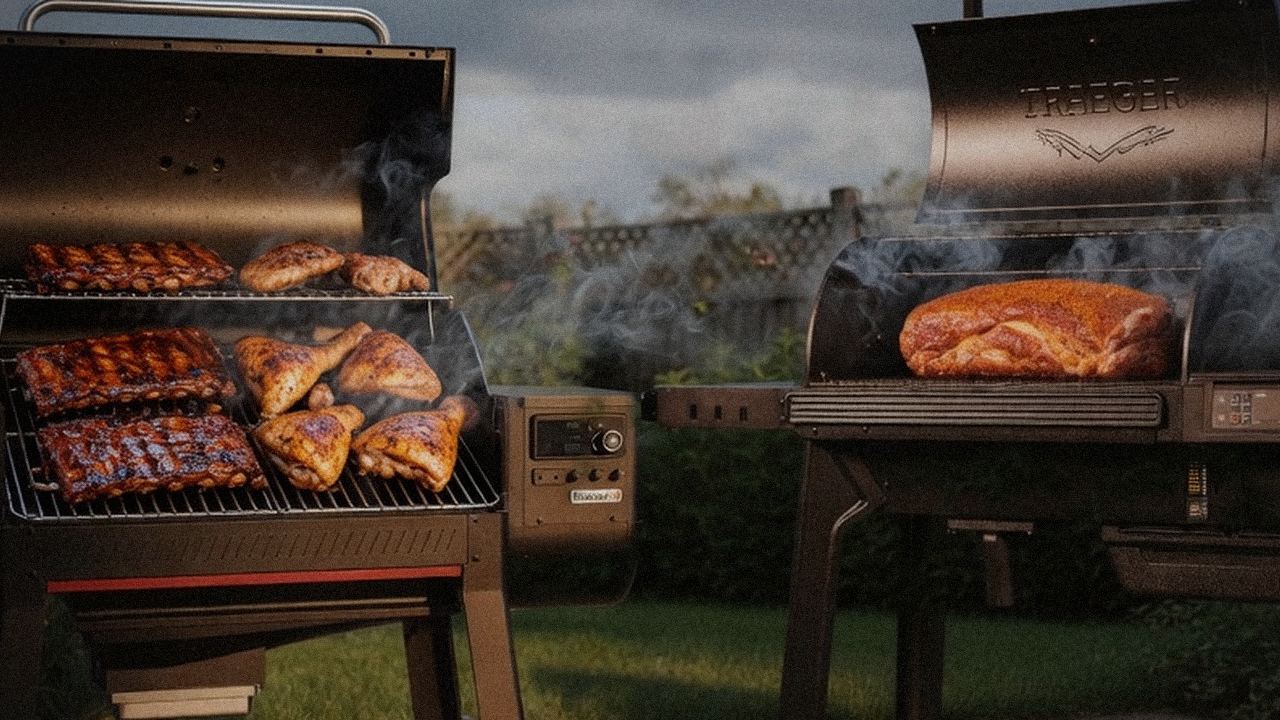
I cooked on the SmokeFire era, so I will not sugarcoat it. Firepot flare-ups, auger jams, temperature swings in the early generations, a rear hopper that was awkward to fill, and enough ash trouble to generate warranty claims. The second generation improved things and the problems still kept getting reported. Those grills are now discontinued; parts remain available but no new units sit at major US retailers, and support is shifting to the Searwood line.
The redemption is measurable. SmokeFire to Searwood, temperature accuracy went from 6.5 to 8, ease of use from 7 to 8.7, cleaning from 6 to 7.3, overall from 6.8 to 7.9. Same 600°F ceiling and searing DNA, wildly better execution. Weber effectively took its one real advantage, high heat with flame access, and rebuilt everything around it that used to break. If you got burned by a SmokeFire, or by its reviews, the Searwood is a different machine that happens to share a badge.
Traeger never had a faceplant like this, and that consistency is worth something. It is a big part of why the brand owns the default slot in the category.
Which app can you live with?
Weber's app scored 8.7 with me, and the killer feature is what it does not do: no subscription, no paywall creep, just probes, graphs, and control. Traeger's app ecosystem is the most mature in the industry, with a deeper recipe library and years of polish, and it wins on breadth.
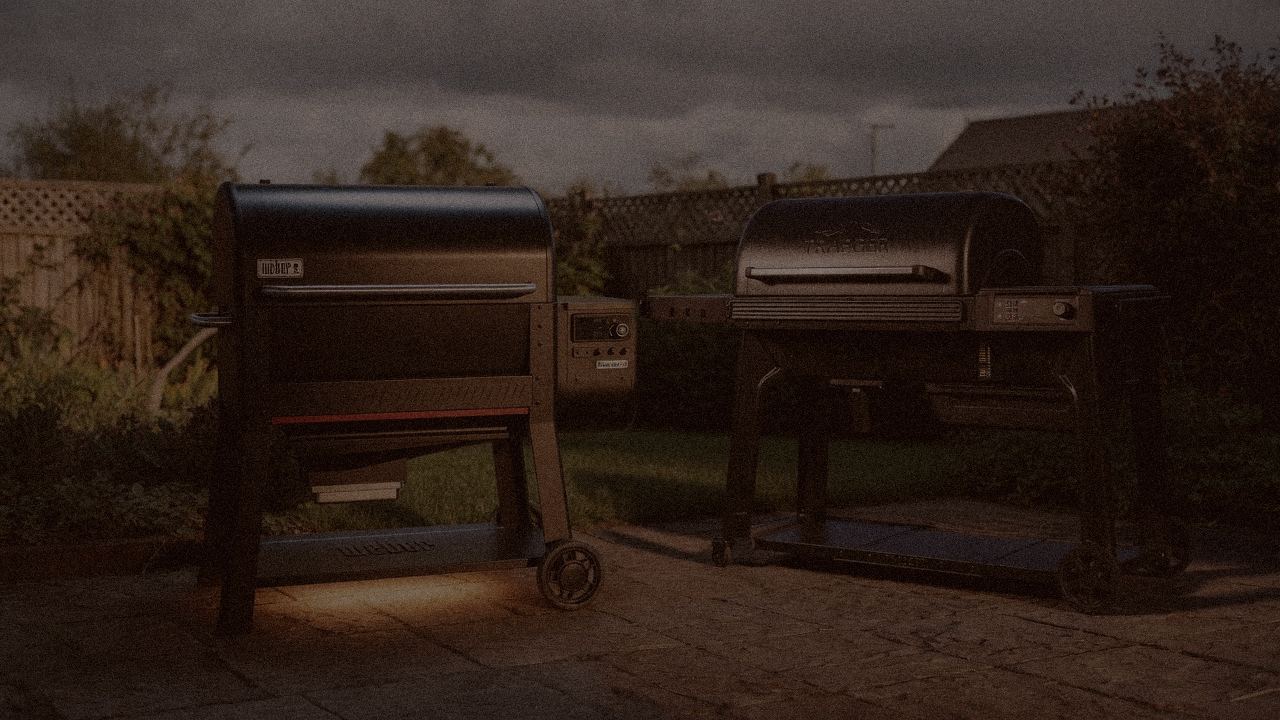
This one splits by what you want from a phone. The Weber Connect experience on the Searwoods is clean and fast, everything works without an account upsell, and that 8.7 is among the best app scores I have given. Traeger has been doing connected grilling longer than anyone, and it shows in the ecosystem: guided cook programs, a huge recipe catalog, and an owner community that has answered every question you will ever have. Traeger's dealer network deserves the same credit. There is a store that stocks parts, pellets, and a human who knows the product in nearly every town, and Weber's pellet presence is not there yet.
What does the value math say?
Traeger wins price per square inch at the low end, Weber wins it where searing lives. The Woodridge is cheapest space at $1.05 per square inch; the Searwood XL lands at $1.34 with 100 more degrees and direct flame. On warranty math, Traeger's 10 years crushes Weber's 5.
Computed straight from the spec sheet, no adjustments:
| Model | Price | Area | $ per sq in | Warranty | Price per warranty year |
|---|---|---|---|---|---|
| Traeger Woodridge | $900 | 860 sq in | $1.05 | 10 yr | $90 |
| Traeger Woodridge Pro | $1,178 | 970 sq in | $1.21 | 10 yr | $118 |
| Weber Searwood XL 600 | $1,299 | 972 sq in | $1.34 | 5 yr | $260 |
| Weber Searwood 600 | $999 | 648 sq in | $1.54 | 5 yr | $200 |
| Traeger Woodridge Elite | $1,800 | 970 sq in | $1.86 | 10 yr | $180 |
Two things jump out. The Woodridge Pro really is the value sweet spot of Traeger's lineup, matching the XL's space for less money with twice the coverage. And Weber's 5-year warranty is the least defensible number on their side of this page; a company selling its pellet redemption arc should be backing it longer. If the warranty column is what decides you, that is a rational decision and I will not argue.
Which should a first-timer buy?
If this is your first pellet grill and the budget stops near $900, buy the Traeger Woodridge and do not overthink it. You get 860 square inches, a 24-pound hopper, WiFi, and a 10-year warranty from the brand with the most beginner support on earth, both in the app and at the dealership counter. The learning curve is famously gentle, and the sear you are giving up is a technique you were not going to use in month one anyway.
If you can reach $1,299, I would point a first-timer at the Searwood XL without hesitation, precisely because it will not need replacing when your skills grow. First grills tend to teach you what you wish you had bought. The XL skips that lesson: it smokes as easily as the Traeger, then hands you real flame the day you get curious about steak. Its 8.7 ease-of-use score is the same story from the other direction. Fast startup, no ritual, food on faster.
Who should buy a Traeger anyway?
Plenty of people, honestly. Buy Traeger if you want a specific size or price Weber simply does not make: a $300-square-inch portable like the Tailgater for camping, a compact Pro 575 for a small patio, or a monster 1,320-square-inch Timberline XL for feeding a crowd. Weber's entire pellet catalog is two grills. Traeger's ladder has a rung wherever your budget lands, and that breadth is a real advantage, the same one that keeps them ahead of the budget brands in Traeger vs Pit Boss.
Buy Traeger too if the 10-year warranty and the local dealer matter more to you than peak performance, or if you live inside their ecosystem already: the app, the rubs, the recipes, the neighbor who can troubleshoot your grill because he owns the same one. Those are unsexy reasons and they are good ones. What you are trading away is the 600°F ceiling and the flame, full stop.
Verdict: Weber or Traeger?
Weber wins this matchup, and the Searwood XL is why. It is the better cooking instrument: 600°F against 500°F, direct flame against a cast iron workaround, an 8.3 sear score, quick clean startups, and an 8.7 app with no subscription attached. It carries a 7.9 overall score through my testing, and it earned the top spot on this site against every grill we cover, not just against Traeger. The SmokeFire era was a real black eye, and the Searwood is the rare sequel that fixed what broke.
Traeger loses the matchup and remains the right buy for real people. A grill at every price from tailgate to $1,800, a 10-year warranty that doubles Weber's, the most mature app ecosystem going, and a dealer network Weber's pellet line cannot match. If your budget, your patio, or your patience for workarounds points that way, the Woodridge Pro at $1.21 per square inch is a purchase you will not regret.
Me? I finished those burnt ends over open flame while the cast iron was still heating up. That is the whole review.
Is Weber better than Traeger for pellet grills?
For pure cooking capability, yes. The Weber Searwood XL reaches 600°F with direct-flame searing and scores 7.9 in our testing, while current Traegers stop at 500°F with no sear function. Traeger is better on lineup range, warranty length (10 years vs 5), app ecosystem, and dealer support.
Is the Weber Searwood a replacement for the SmokeFire?
Yes. The SmokeFire EX4 and EX6 are discontinued, with parts still available but no new units at major US retailers, and the Searwood 600 is the direct replacement. The Searwood fixed the SmokeFire's biggest failures: temperature accuracy improved from 6.5 to 8 in our scoring and overall from 6.8 to 7.9.
Can a Traeger sear a steak?
Not the way a flame can. Every current Traeger in this comparison tops out at 500°F with convection heat only, so owners sear with a preheated cast iron pan on the grate. It produces a decent crust with extra effort. The Searwood's 600°F direct-flame setup sears without any accessories.
Which Traeger is closest to the Weber Searwood XL?
The Woodridge Pro. It matches the XL almost exactly on cooking area, 970 vs 972 square inches, costs $121 less at $1,178, and carries a bigger 24-pound hopper plus a 10-year warranty. It gives up the XL's 600°F ceiling and direct-flame searing.
Do Weber pellet grills last, given the shorter warranty?
Build quality on the Searwoods scores 8 in our testing and the construction feels like Weber's gas-grill heritage. The honest catch is coverage: Weber backs its pellet grills for 5 years while Traeger backs the Woodridge and Ironwood lines for 10, so Traeger is the safer bet on paper for the long haul.