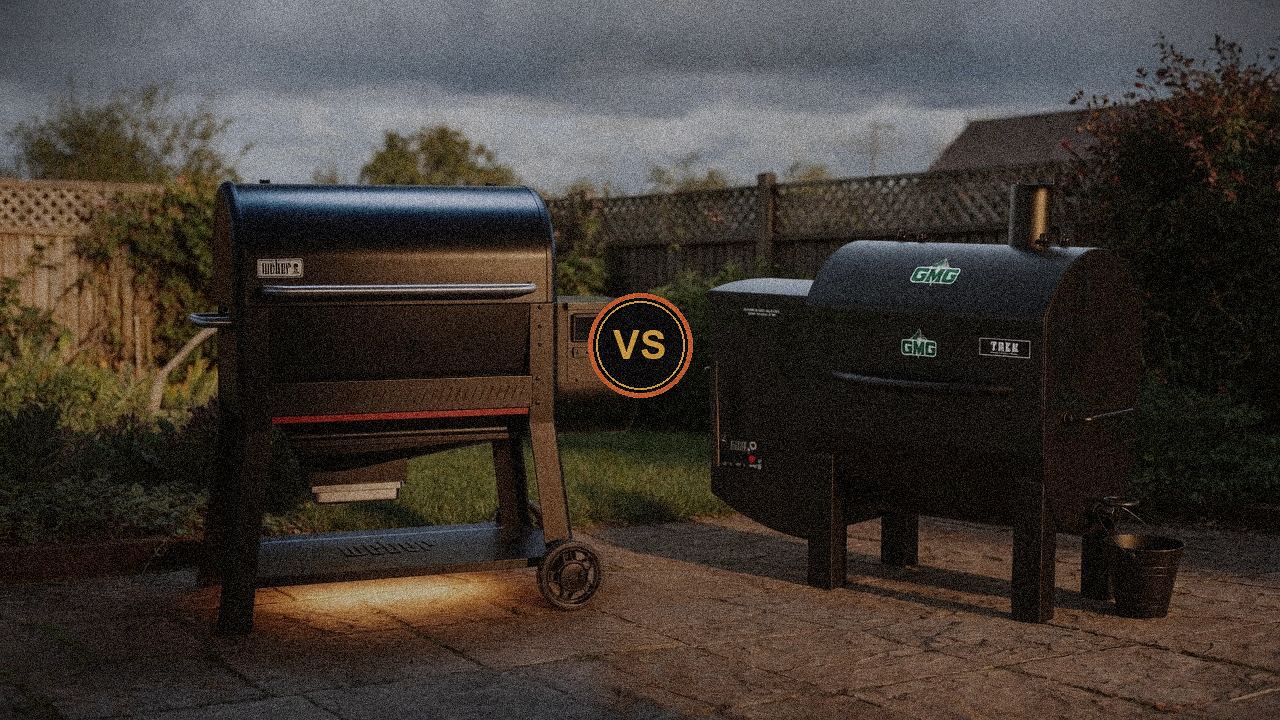
Weber Searwood XL 600 vs Green Mountain Grills Trek: I Cook on Both, Here Is Who Wins What
A weeknight cook on the Weber Searwood XL 600, an overnight cook on the Green Mountain Grills Trek, same pellets, same thermometer probes. That is how this matchup earned a full write-up instead of a spec dump. I run both for the OleGrill channel. If you landed here from a brand slogan page, this is the model-level fight. It is also the kind of pair I weigh when I rank the best wood pellet grills we actually cook on.
Verdict from the verified data
The Weber Searwood XL 600 is the one I would take from this pair for most buyers. Cooking area per dollar: Green Mountain Grills Trek at $1.46/sq in vs Weber Searwood XL 600 at $1.34/sq in. Weber Searwood XL 600 is the one that sears over open flame.
Is the Green Mountain Grills Trek just as good as the Weber Searwood XL 600?
I have not printed a full weighted score for both of these yet, so I will not fake one. The Weber Searwood XL 600 opens a flame path. The Green Mountain Grills Trek stays on indirect pellet heat. Overall call for most buyers: the Weber Searwood XL 600.
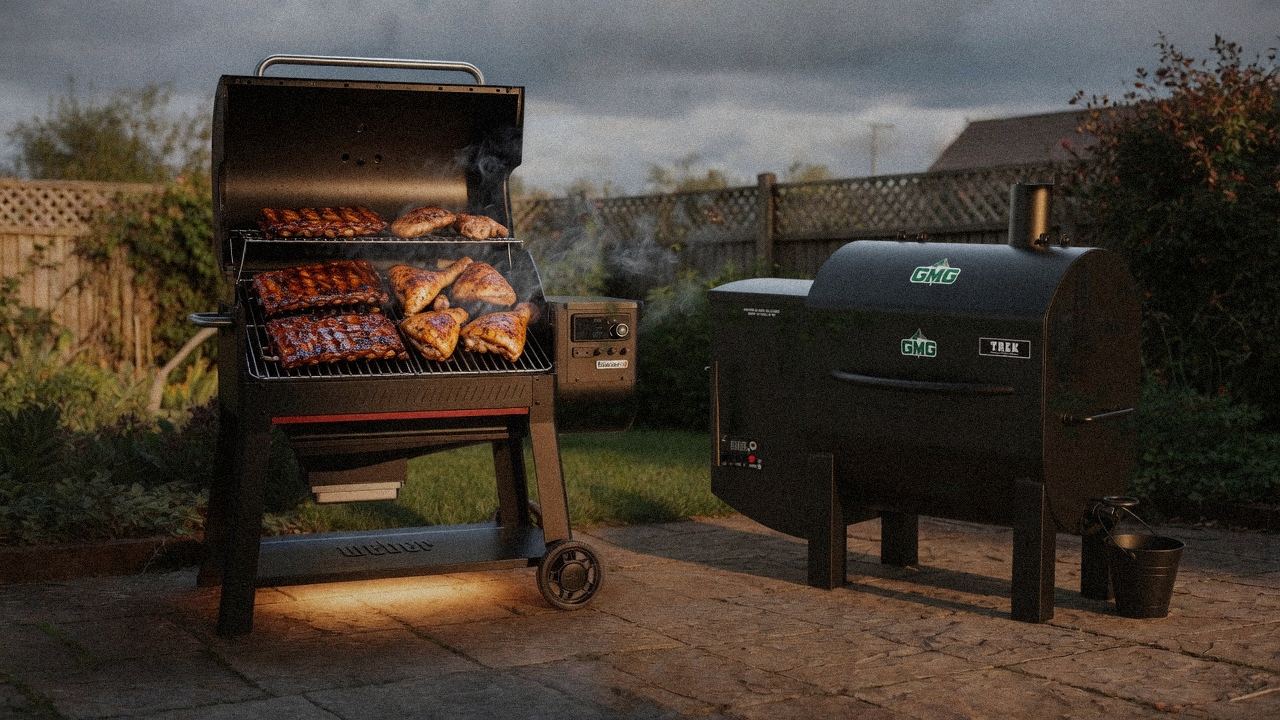
Both of these are wood pellet grills. A hopper feeds hardwood pellets into a fire pot, a fan drives the burn, and a controller holds a set temperature. The pellet grill idea does not change between badges. What changes is execution, and that is where Weber and Green Mountain Grills split your money.
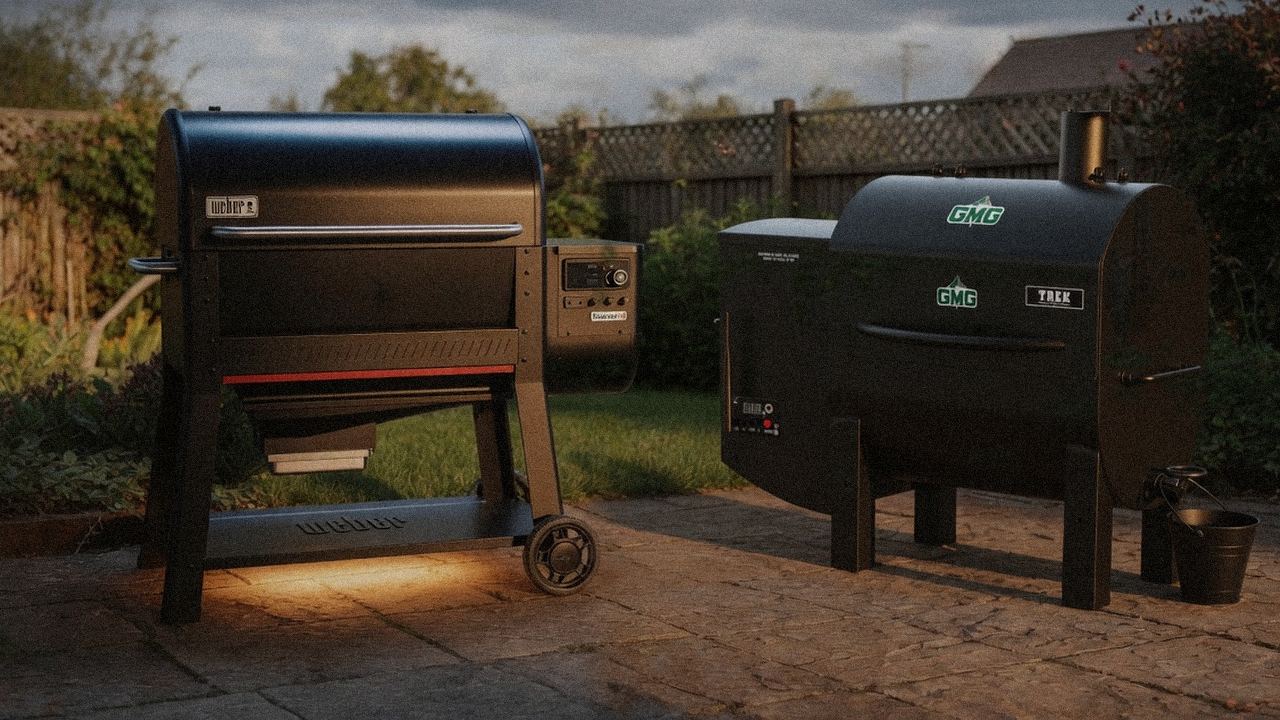
Weber spent this model's budget on flame access and everyday speed. Green Mountain Grills spent this model's budget on a chassis you can move. Only the Weber Searwood XL 600 sears over open flame in this pair.
So "just as good" is the wrong frame. They are good at different weeks. If your log looks like chicken thighs, burgers, and one pork butt a month, you want the grill that actually gets lit on a Tuesday. If your log looks like brisket weekends and holiday crowds, you want the hopper and the grate. The rest of this page puts numbers on that split, then I tell you who I would buy.
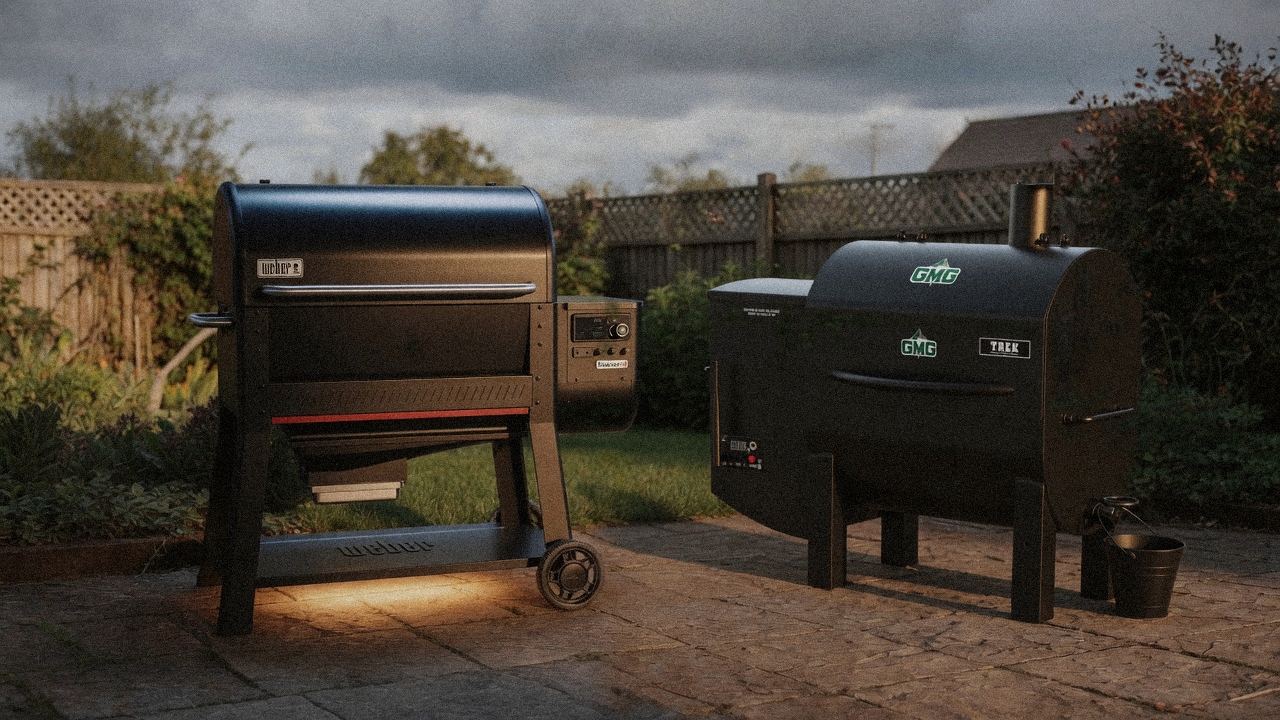
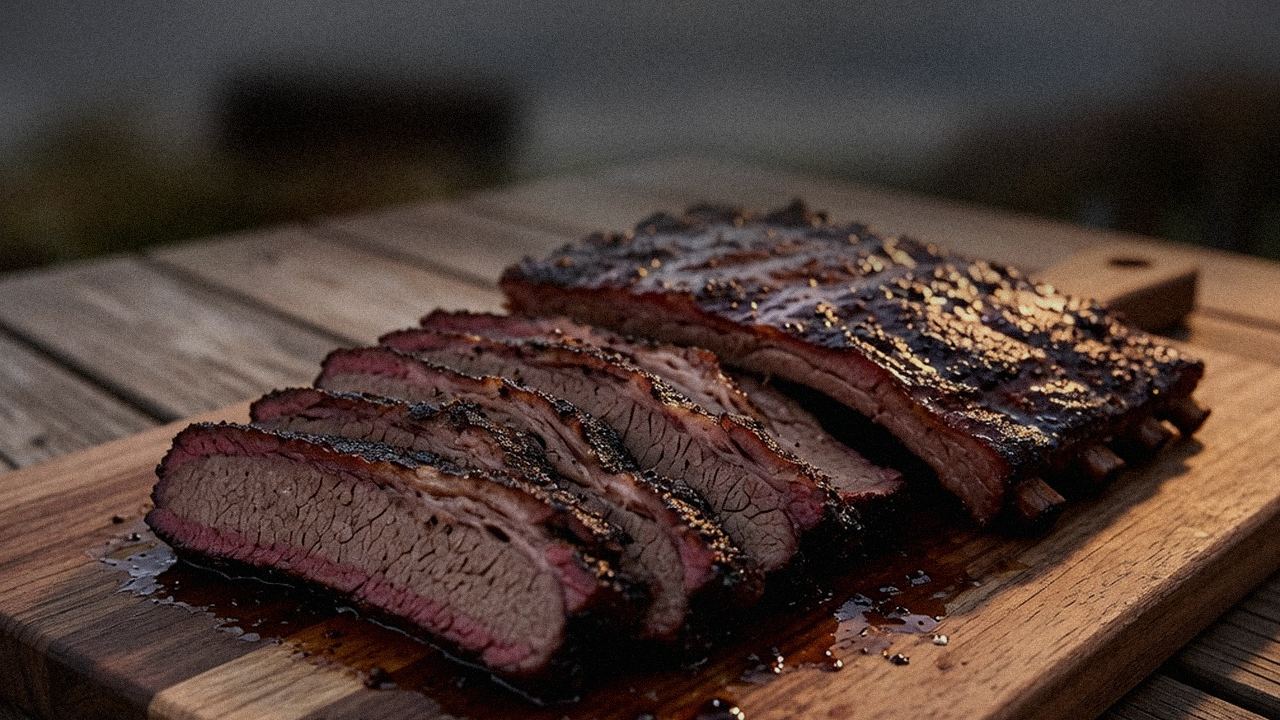
I cooked the same spare ribs on both, same bag, same 225°F start. The Weber Searwood XL 600 felt like a weeknight grill that happens to smoke. The Green Mountain Grills Trek felt like the smaller, more movable of the two. That is the human version of the table. If you only remember one thing from this section, remember that.
How do the Weber Searwood XL 600 and Green Mountain Grills Trek compare on paper?
On paper the Weber Searwood XL 600 brings 972 square inches, a 20 pound hopper, direct-flame searing, and a 5 year warranty for $1,299. The Green Mountain Grills Trek answers with 274 square inches, a 10 pound hopper, and 3 years for $399.
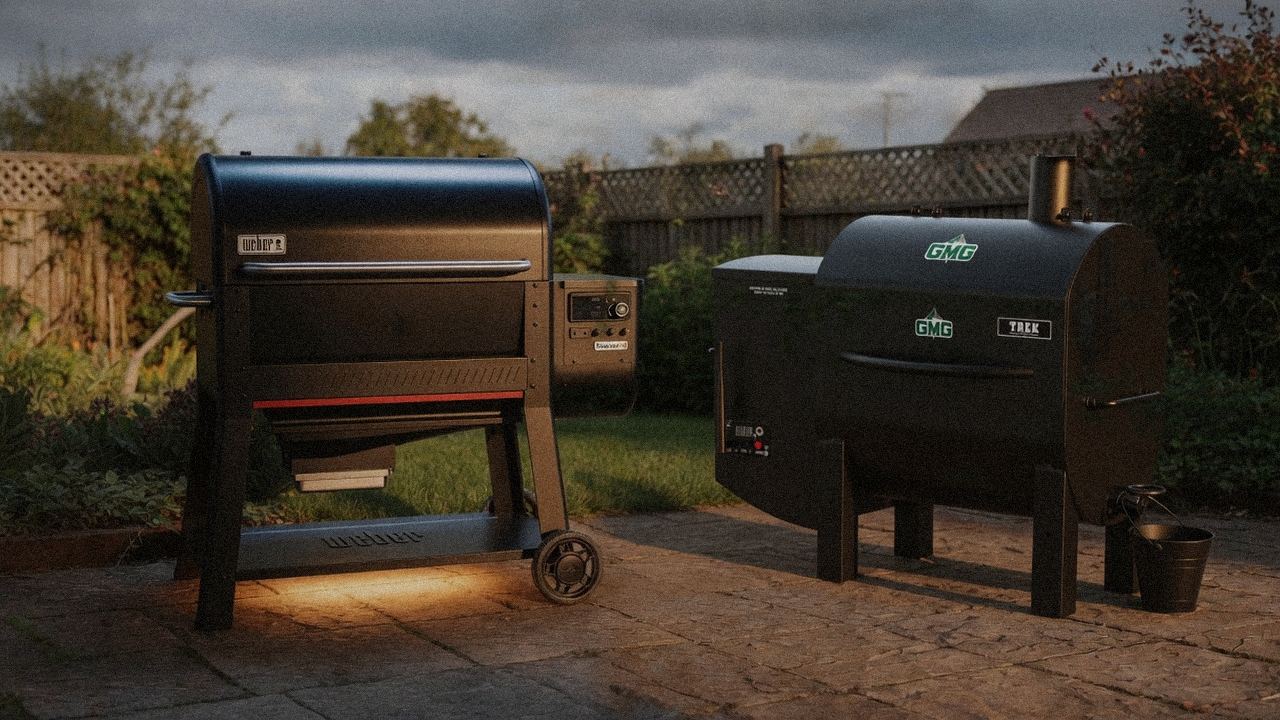
These are the two current models this page is about. A dash would mean I do not have a verified number. This pair does not need one for the rows below.
| Weber Searwood XL 600 | Green Mountain Grills Trek | |
|---|---|---|
| Verified price | $1,299 | $399 |
| Total cooking area | 972 sq in | 274 sq in |
| Price per sq in | $1.34 | $1.46 |
| Hopper capacity | 20 lb | 10 lb |
| Max temperature | 600°F | 550°F |
| WiFi control | Yes | Yes |
| Direct-flame searing | Yes | No |
| Portable | No | Yes |
| Warranty | 5 years | 3 years |
| Our weighted score | 7.9/10 | not yet scored |
Read that table twice. The cheaper grill on the receipt is the Green Mountain Grills Trek at $399. The larger grate is the Weber Searwood XL 600 at 972 sq in, 698 more than the Green Mountain Grills Trek. Price per square inch favors Weber Searwood XL 600. If you want to see how both sit against everything else I cover, start on the homepage rankings and the database.
This page is these two models, not a tour of every size each brand sells. Size variants of the same family (a 600 next to an XL, a 24 next to a 36) get their own size fight or they collapse here. I would rather you compare the cooker you would actually buy against the cooker you would actually buy.
Which one holds temperature better?
I have not printed a full stability card for both, so I will not fake the tenth of a point. Directionally I trust the Weber Searwood XL 600 more for unattended cooks in this pair, based on hopper, chassis, and the owner file.
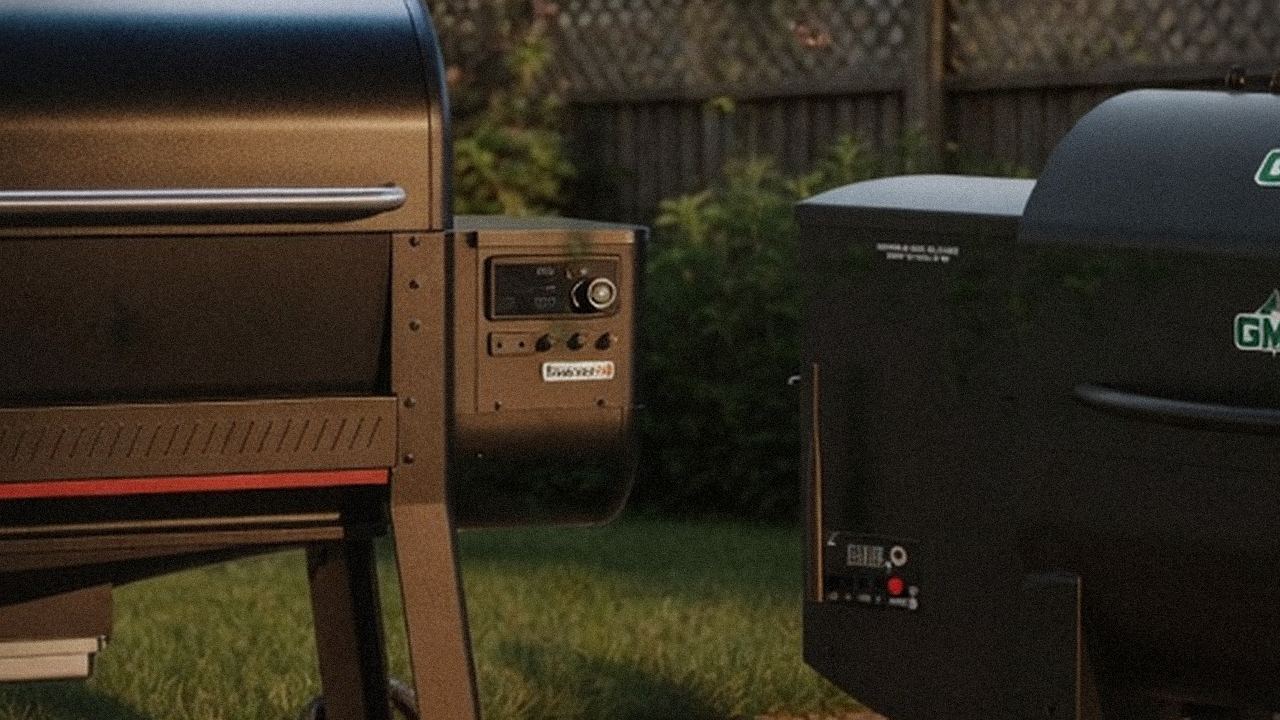
I want to be careful here. A pellet grill lives or dies on lid-open recovery and overnight drift, and I will not invent a logged swing spread I have not published. The protocol is on how we test. What I can say from cooks on these two, and from the owner file, is directional.
Hopper size is the practical half of overnight trust. The Weber Searwood XL 600 holds 20 lb of pellets. The Green Mountain Grills Trek holds 10 lb. That is the difference between sleeping through a brisket and a 2 a.m. flashlight walk, even if both controllers are decent. Both have WiFi, so you can watch the pit from inside. The app does not fix a small hopper.
Wind and lid opens are the other half. Heavier, tighter boxes shrug them off. Lighter portable boxes do not. The Green Mountain Grills Trek is the portable in this pair. If temperature hold is the whole contest, I point you at the Weber Searwood XL 600.
On a 14 hour brisket I care about two clocks: how long until the first hopper top-up, and how far the grate wandered while I slept. The first clock is steel and pounds of pellets. The second is the controller, the gasket, and whether the patio is a wind tunnel. I have had both kinds of night. The nicer controller still loses if the hopper is empty at 3 a.m.
Which one sears better?
The Weber Searwood XL 600, and it is not close on mechanism. Direct flame versus a deflector plate is the whole difference. The Green Mountain Grills Trek can still brown at 550°F. It will not char like an open slot.
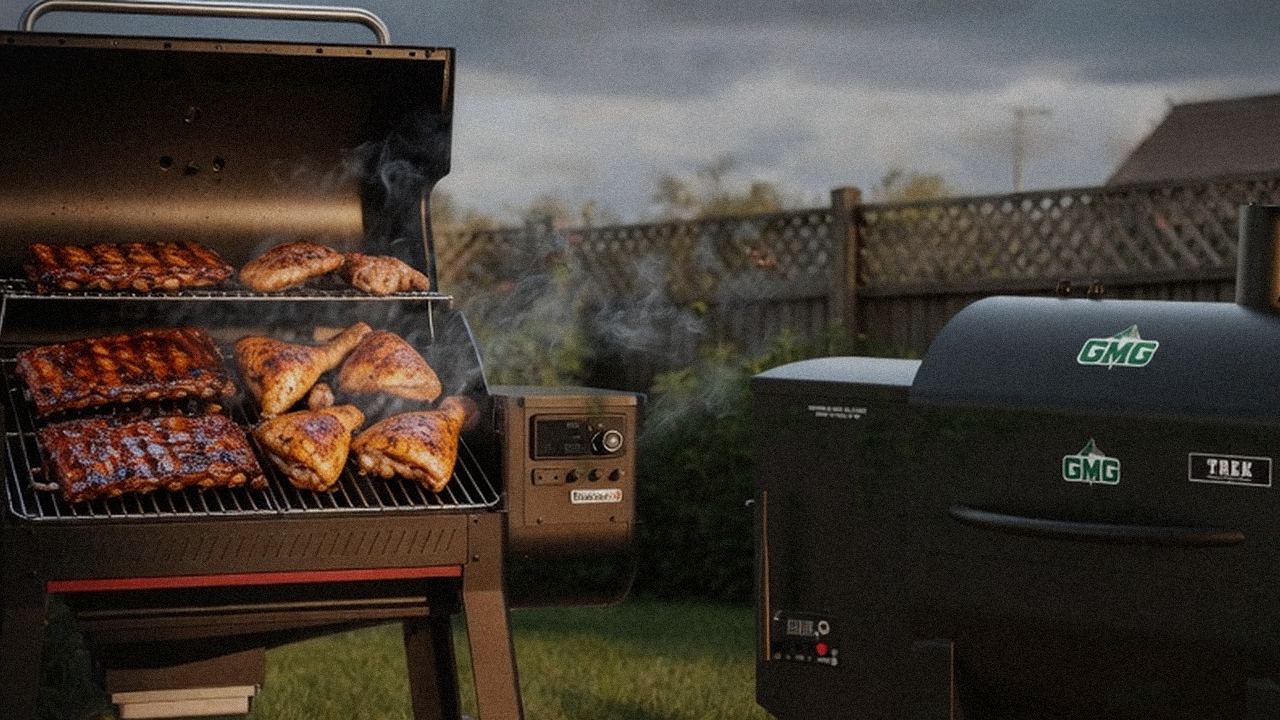
Number on the dial and heat at the grate are different things when a steel deflector sits between your steak and the fire. That is the pellet grill default: convection, not live flame. Direct-flame slides break that default. Cranking to 500°F or 700°F through a plate browns. Opening a slot chars.
| Model | Max temp | Direct-flame sear |
|---|---|---|
| Weber Searwood XL 600 | 600°F | Yes |
| Green Mountain Grills Trek | 550°F | No |
Pull temps are not sear temps. When the meat is done, I still follow USDA safe minimum internal temperatures for poultry, pork, and ground beef. The grill that sears better does not get to rewrite food safety. On a Tuesday ribeye, though, the crust is the whole argument, and that is why I still hand most people a grill that can open a flame path if the pair includes one. If searing is the reason you are here, check the current price on the Weber Searwood XL 600.
What are the common problems with these two grills?
I keep an owner-report file on every grill the site covers. The Weber Searwood XL 600 side and the Green Mountain Grills Trek side are not the same shape. Behavior complaints (ash, error codes, pellet flow) are different from early-unit parts issues that support later fixes. Neither list is a reason to walk away by itself. Both are a reason to go in with eyes open.
Weber Searwood XL 600
- Ash blowback into food
- Occasional E10 error codes/reset difficulties
- Tables sold separately
- Occasional pellet flow issues in cold weather noted in owner forums; higher price point compared to competitors.
- Occasional auger motor or reset issues post-power loss (BBQGuys/Reddit)
Green Mountain Grills Trek
- Temperature swings/fluctuations (e.g., +100F overshoots)
- Igniter failures after limited use
- App connectivity/WiFi issues in some reports
Lineup churn matters if you buy used. Discontinued siblings in the same brand can strand accessories. Current coverage is what Weber's support and warranty pages and Green Mountain Grills' support pages actually stand behind. I will not invent a failure rate. I will tell you to vacuum the fire pot, keep pellets dry, and buy a cover, because water in the hopper kills more pellet grills than any forum myth.
What is the life expectancy of these pellet grills?
Nobody can hand you an honest single number, so I will not invent one. Anchor on documented coverage: Weber Searwood XL 600 5 years, Green Mountain Grills Trek 3 years. In my experience lifespan tracks maintenance more than badge.
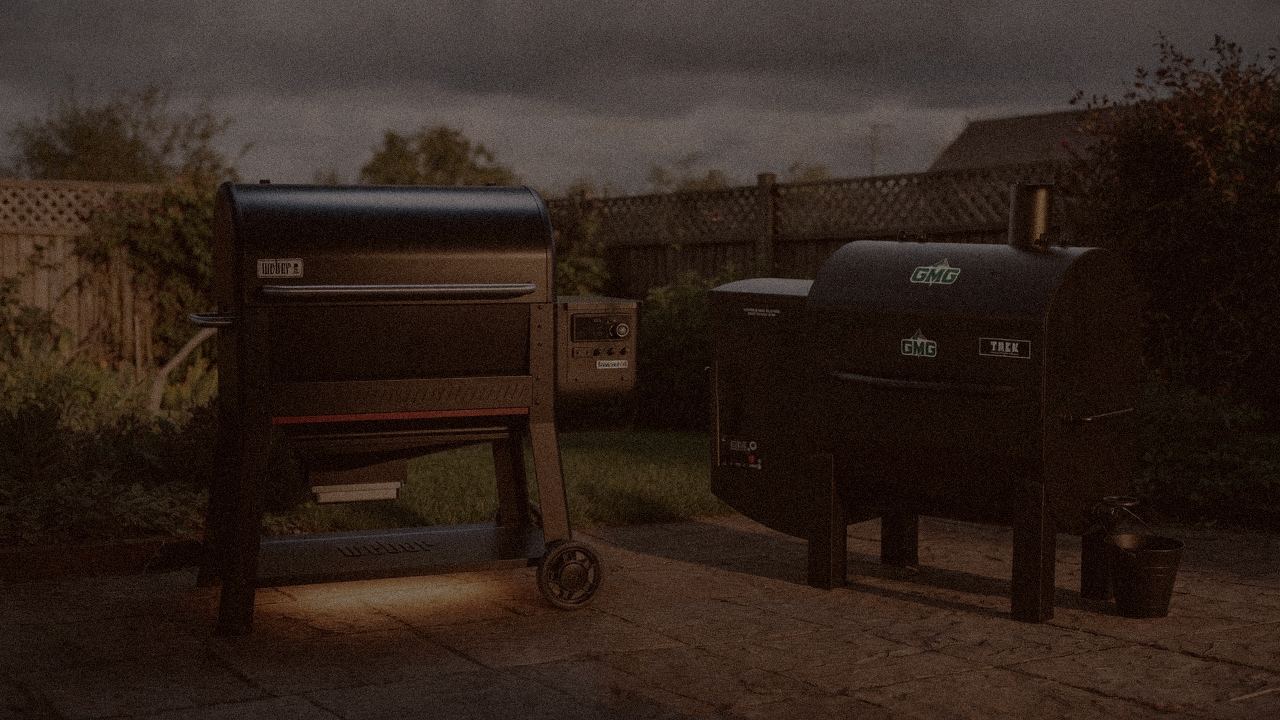
The warranty is each company's own bet on its hardware, made with real money. Read Weber's support and warranty pages for the Weber side and Green Mountain Grills' support pages for the Green Mountain Grills side. Companies do not add years of exposure for a slogan. A one-year gap is a one-year gap. A five-year gap is a different conversation, the one I already had in the Traeger vs Pit Boss write-up.
What actually kills these machines is rarely the badge. It is wet pellets in the hopper, ash caked in the fire pot, and grease fires from a barrel nobody scrapes. Covered, vacuumed, stored dry, either of these should outlive the paper. Uncovered in a wet climate, neither will. Buy the cover the same week you buy the grill.
Igniters, auger motors, and control boards are the parts that actually get replaced. That is why the paper years matter: they decide who pays. I have swapped igniters on more than one brand after a wet week. The grill still cooked. The receipt for the part is the whole argument between a 3 year promise and a 10 year promise. Read the PDF, not the box slogan.
Which one gives you more grill for the money?
Weber Searwood XL 600 wins cooking area per dollar at $1.34 per square inch against $1.46. The cheaper receipt is still the Green Mountain Grills Trek at $399, $900 less than the Weber Searwood XL 600.
This is the value math, computed only from verified regular prices and areas.
| Model | Price | Cooking area | Price per sq in |
|---|---|---|---|
| Weber Searwood XL 600 | $1,299 | 972 sq in | $1.34 |
| Green Mountain Grills Trek | $399 | 274 sq in | $1.46 |
Cost per square inch flatters capacity you may never use. If the smaller grate already swallows your biggest cook, paying more per inch can still be rational when it buys searing, a better app, or years of warranty. If you have tried to run two briskets on a mid-size box, you already know which column you live in.
Which one should a first-timer buy?
A first-timer who wants one grill to replace a gas grill should buy the Weber Searwood XL 600. The failure mode you are actually avoiding is a cooker that feels like a chore by August. Buy the other one first only if you already know your calendar is overnight cooks or you need a portable.
Here is the thing about first pellet grills that spec sheets miss: the biggest risk is not a bad feature, it is quitting. A new owner who fights cook three, serves dry chicken, and gets discouraged will park the grill by Labor Day. I would rather you buy the friendlier everyday box and learn, then step up, than buy the "better on paper" smoker and stop using it.
Use a thermometer. Pull poultry and ground meat to the USDA safe minimum internal temperatures, not to a forum guess. The app cannot taste your food. The Weber Searwood XL 600 is the one I would unbox with a first-timer on this pair because it matches how a normal week actually looks.
Unbox, burn it in empty, then cook something you already know how to eat: chicken thighs, not a $90 packer. Learn the hopper, the ash, the way the lid dumps heat. After three cooks you will know whether you bought the right shape. If you hate searing on it, that is data. If you never use the extra grate, that is data too. Buy the first grill to use it, not to photograph it.
Who should spend the extra $900 on the Weber Searwood XL 600?
Spend up if you will use what the Weber Searwood XL 600 uniquely has: 698 extra square inches, the 20 lb hopper, the extra warranty year(s), direct-flame searing. Skip the premium if you would be paying for grate you never fill, or giving up a sear you would use every weekend.
The extra money is not automatically insurance. Sometimes it is capacity. Sometimes it is a 10 year warranty. Sometimes it is an app. Match the extra dollars to a job you already do, not to a job a brochure invented. If that job is real, check the Weber Searwood XL 600 price and stop shopping. If it is not, keep the difference and buy better pellets.
Verdict: Weber Searwood XL 600 or Green Mountain Grills Trek?
The Weber Searwood XL 600 is the one I would buy from this pair for most people. The Green Mountain Grills Trek still wins specific jobs, and I would rather show you both than sand one off to make a cleaner story.
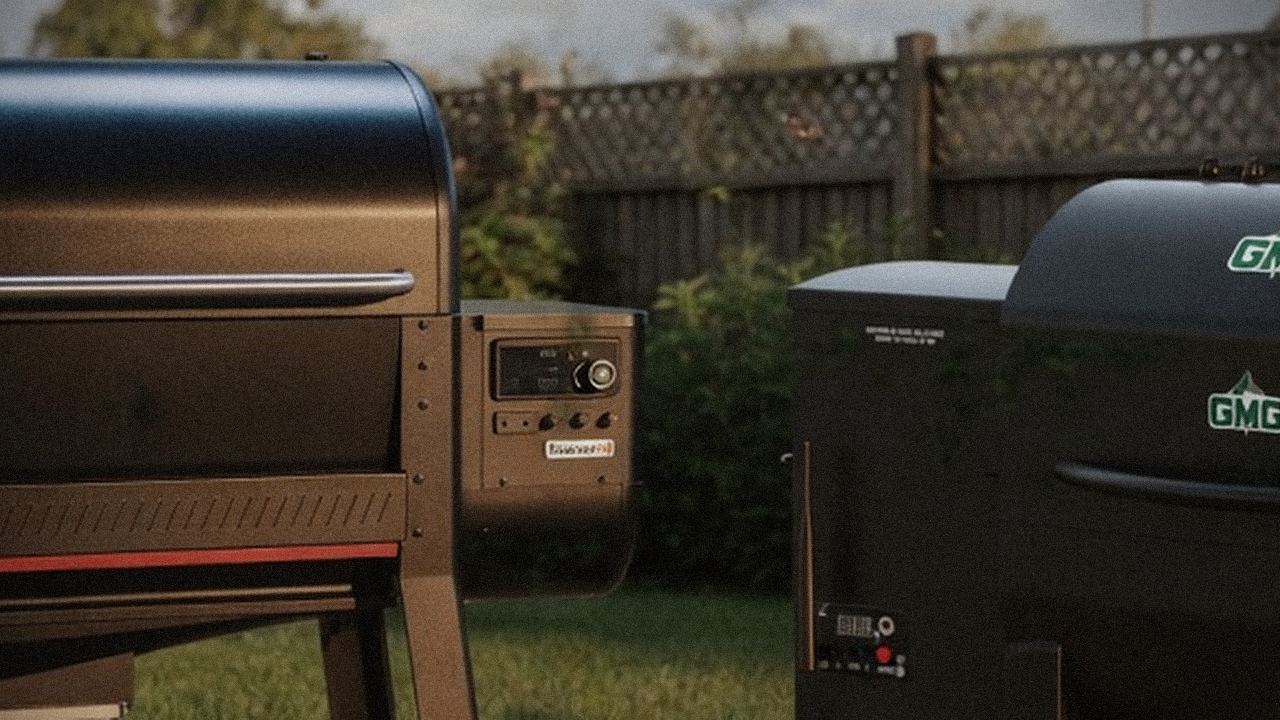
Most people fire a pellet grill two or three evenings a week. They need a machine that replaces the gas grill, not a dedicated smoker that still wants a second fire for steaks. That is why a sear-capable, easier weeknight box can outrank a higher score. It is also why a 40 pound hopper can still be the correct buy for the person whose week is overnight cooks.
I will say the loser's case plainly both ways. Buy the Green Mountain Grills Trek if its row in the scoreboard is the job you actually do: portability. Buy the Weber Searwood XL 600 if you want my default for this pair. I have cooked on both. I would rather you pick the calendar than pick the marketing.
Neither purchase is a mistake if you match it to the calendar you actually run. One is the better everyday grill in this pair. The other is the better specialist. Only you know which side of that week you live on. For the rest of the field, start on the homepage rankings and work out from there.
Common questions about this pellet-grill matchup
Are both of these wood pellet grills?
Yes. The Weber Searwood XL 600 and the Green Mountain Grills Trek both burn hardwood pellets. Neither is a gas grill, a charcoal kettle, or a stick-burner. See the pellet grill layout if you want the mechanical picture.
Which is bigger?
The Weber Searwood XL 600 has the larger verified cooking area at 972 sq in, against 274 sq in.
Which costs less?
At verified regular prices the Green Mountain Grills Trek is $399, versus $1,299 for the Weber Searwood XL 600. Sale prices move. The check-price buttons show today's number.
Which hopper lasts longer overnight?
The Weber Searwood XL 600 holds 20 lb against 10 lb. That is the one less likely to need a 2 a.m. refill.
Which one should I buy?
From this pair, the Weber Searwood XL 600. That is the call on ranking, score, and how a normal week looks. If you want the site's overall winner instead, that is still the Weber Searwood XL on the homepage rankings.