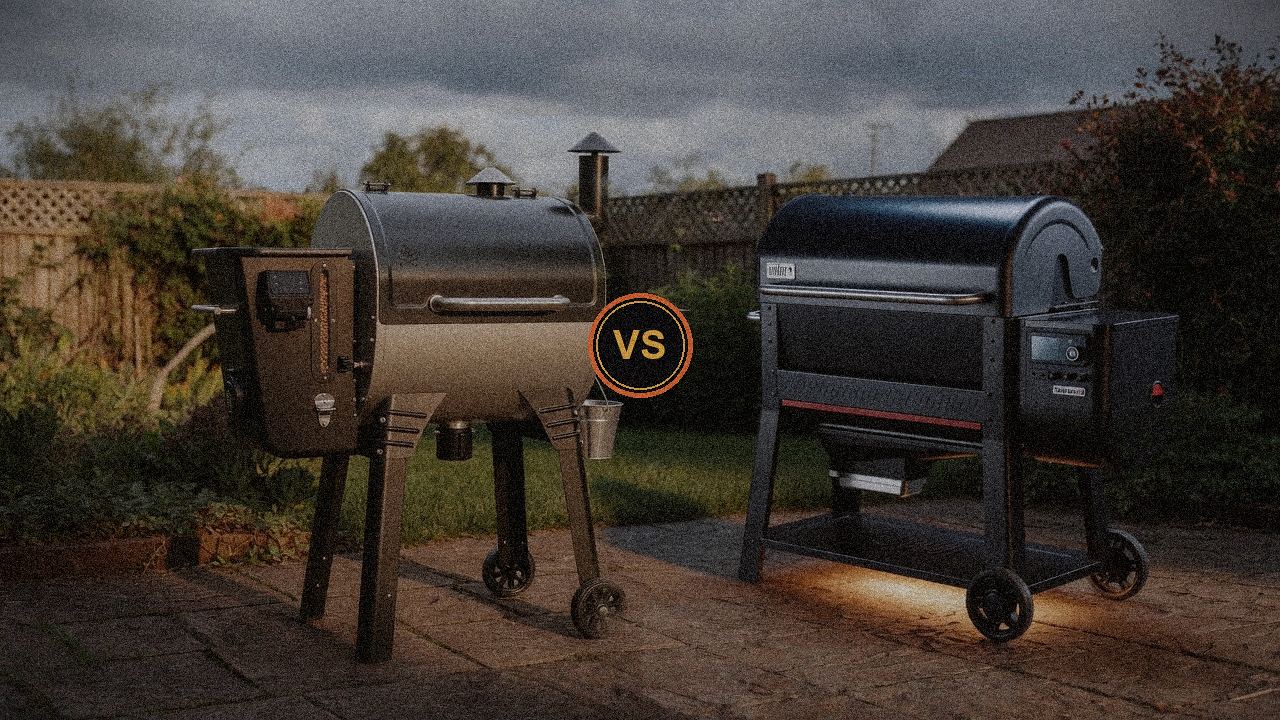
Camp Chef vs Weber: The Smoke Box Meets the Sear Machine
Camp Chef vs Weber after cooking on both: the Woodwind Pro's 9/10 smoke box and easy cleanout against the Searwood XL's 600°F sear, fast startup and 5 year warranty.
 By Oleg Galeev, cooking on pellet grills since 2020, runs the OleGrill YouTube channel
Short answer
Weber wins for most cooks. The Searwood XL 600 sears at 8.3 with a real 600°F ceiling, starts faster, runs the better app, carries a 5 year warranty, and holds my #1 sitewide. Buy Camp Chef when smoke is the whole point: the Woodwind Pro scores 9/10 there and cleans out easier.
Live prices. Affiliate links: we may earn a commission at no extra cost to you. How this works.
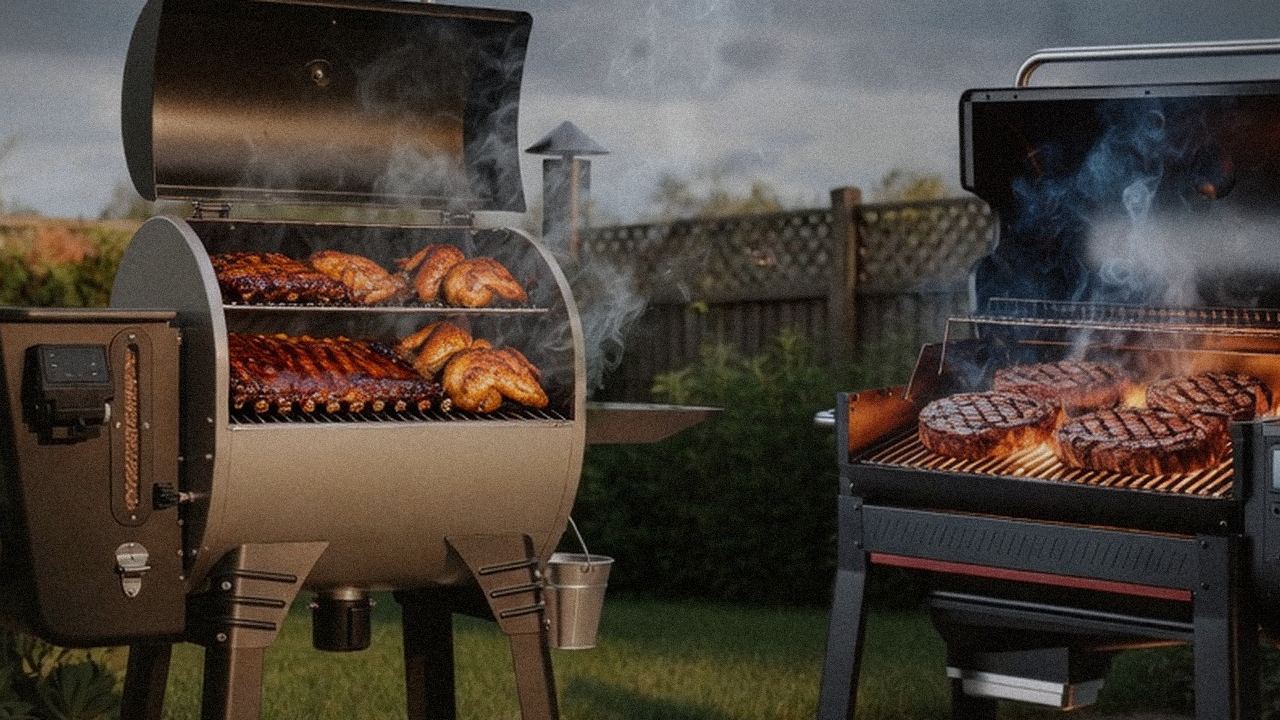
Ribeye night is where this fight got personal. I pulled two steaks off at 115°F internal, walked one to the Searwood XL cranked to 600°F and one to the Woodwind Pro, and the difference was audible. The Weber hissed like a proper steakhouse flat-out sear. The Camp Chef gave me a good crust and a shrug. Then, two weekends later, the Pro's smoke box turned a pork butt so fragrant my wife asked from inside the house what I had done differently, and the Weber has never once earned that question. This is the flavor-versus-fire matchup, and each brand wins the half it was built for. It is one of the matchups behind the best wood pellet grills rankings on this site.
Here is how the current lineups sit on paper before the thermometers get a vote.
| Spec | Woodwind WiFi 24 | Woodwind Pro 24 | Searwood 600 | Searwood XL 600 |
|---|---|---|---|---|
| Price | - | - | $999 | $1,299 |
| Cooking area | 811 sq in | - | 648 sq in | 972 sq in |
| Hopper | 22 lb | 22 lb | 20 lb | 20 lb |
| Max temp | 500°F | 500°F | 600°F | 600°F |
| WiFi | Yes | Yes | Yes | Yes |
| Direct-flame sear | Yes | - | Yes | Yes |
| Warranty | 3 years | 3 years | 5 years | 5 years |
Pull temps still follow the USDA safe minimum internal temperatures for poultry, pork, and ground beef, no matter which hopper you bought.
Warranty language is what Weber's support pages actually publishes, not a forum guess.
Which brand sears better?
Weber, clearly. Both Searwoods hit a true 600°F and score 8.3 for searing on my sheet, against 8 for the Woodwind 24 and a 500°F ceiling across every Camp Chef here. A hundred degrees at the grate is the difference between a crust that crackles and one that merely browns.
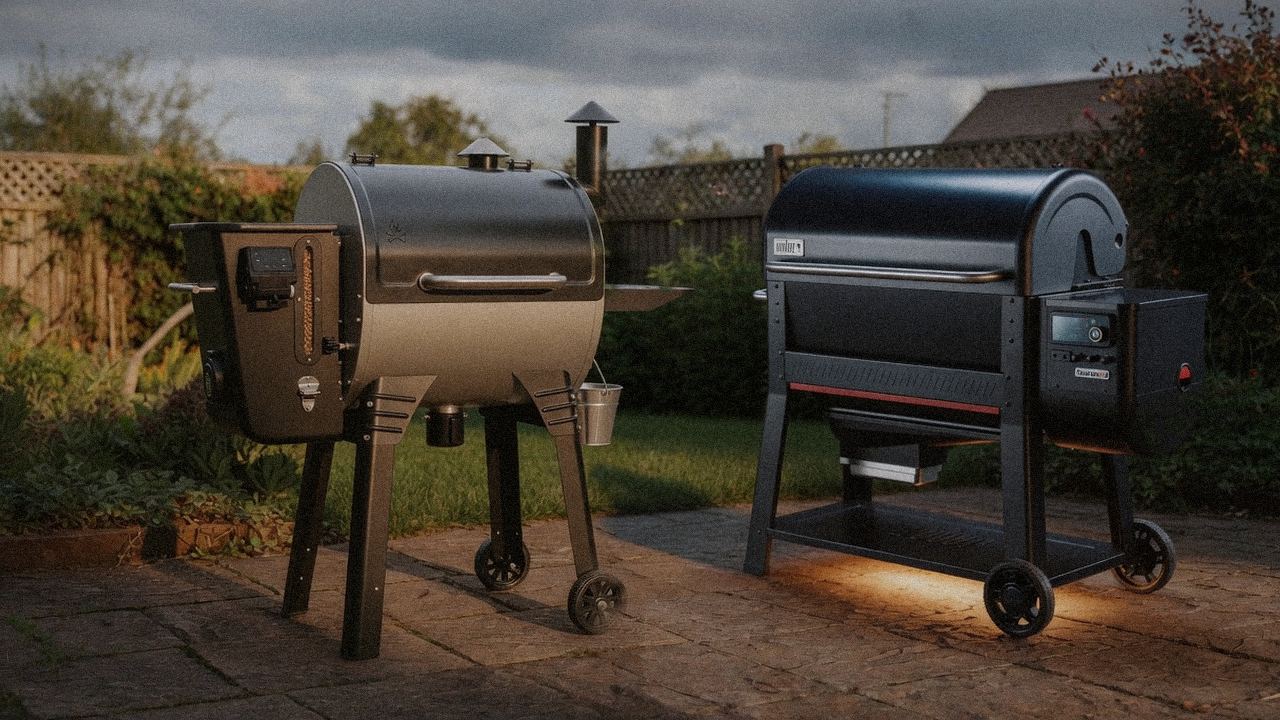
The Searwood's whole personality is built around that top end. Open the sear zone, let the dial climb, and you get direct flame with enough violence for smash burgers and reverse-sear finishes that do not need a cast iron assist. The Woodwind 24 and 36 have their own slide-open direct-flame setup and it works, but the 500°F ceiling means you wait longer for less crust, and my 8 versus 8.3 gap on the scoresheet understates how different the two feel on a cold night with the lid open.
One honest gap in my data: the Woodwind Pro's searing is not in my measured set, so I will not score what I have not logged. Its case never rested on searing anyway. If high-heat cooking is most of your grilling life, this section alone settles the matchup.
Who makes more smoke, and who cleans up faster?
Camp Chef takes both. The Woodwind Pro scores 9/10 for smoke, the standard Woodwinds 8, and every Weber Searwood sits at 7.3. Cleanout runs the same direction: Camp Chef's ash system earns 8.5 against Weber's 7.3, and owners praise the pellet purge as much as I do.
A pellet grill burns compressed hardwood efficiently, and efficient fire is clean fire, which is why stock pellet smoke tastes polite. Camp Chef's answer on the Pro is a dedicated smoke box that smolders real wood chunks beside the firepot. Feed it hickory through the first stretch of a brisket and the bark comes off tasting like it visited an offset. That 9/10 is the same weapon that carries Camp Chef in Traeger vs Camp Chef, and Weber sells nothing that answers it. The Searwood's 7.3 smoke is standard pellet output, pleasant and light, and cranking a smoke boost mode only narrows the gap so far.
Cleanup is Camp Chef's quieter win. Pull a lever, dump the ash, purge the hopper when you switch pellet flavors, done. The Searwood makes you work harder for a clean firepot, and its most common owner complaint is ash blowing back into food at high airflow, which is not a sentence anyone wants to read about a $1,299 grill.
| Dimension (my test scores) | Woodwind 24 | Woodwind Pro 24 | Searwood 600 | Searwood XL 600 |
|---|---|---|---|---|
| Smoke | 8 | 9 | 7.3 | 7.3 |
| Cleaning | 8.5 | 8.5 | 7.3 | 7.3 |
| Build | 7.5 | 8.5 | 8 | 8 |
Which holds temperature better, and which is easier to live with?
Temperature control is a dead heat: every current model in this matchup scores 8 for both accuracy and stability. Daily living is Weber's win. The Searwoods score 8.7 for ease of use and 8.7 for the app, against Camp Chef's 8 and 7.5, and the Weber is the faster machine from cold to cooking.
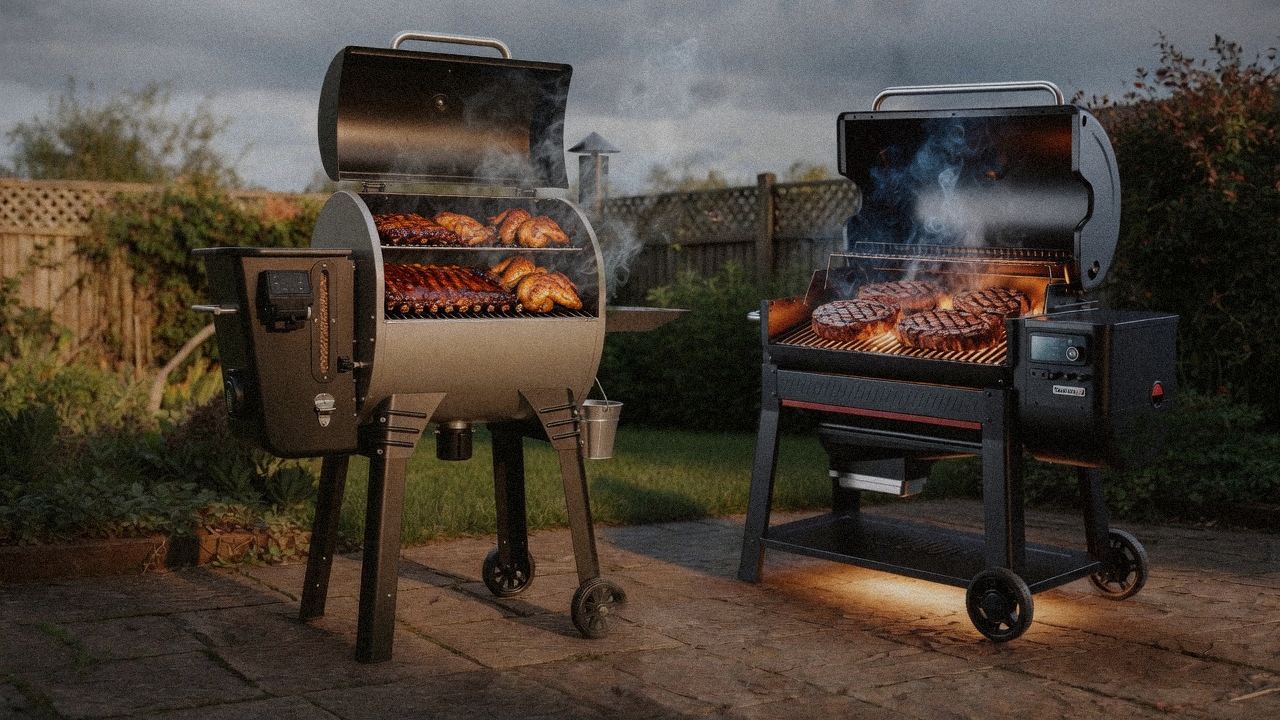
Once burned in, both brands hold a set point well enough that I stopped babysitting either one. The separation shows before the cook starts and on the phone. The Searwood lights and settles quickly enough that steak on a weeknight is a realistic plan, and Weber Connect is the app I actually trust with an overnight alarm. Camp Chef's app is the weak spot in an otherwise likable machine: owners keep reporting connectivity dropouts and the occasional controller glitch on the forums, which matches my 7.5.
Weber earned this reliability reputation the hard way. Its first pellet grill, the SmokeFire, scored a rough 6.8 with me, fought flare-ups and auger jams for two generations, and was discontinued. The Searwood is what Weber built after learning all of that in public, and it shows. The app and controls edge holds up against stiffer competition too, a fight I covered in recteq vs Weber.
| Dimension (my test scores) | Woodwind 24 | Woodwind Pro 24 | Searwood 600 | Searwood XL 600 |
|---|---|---|---|---|
| Temp accuracy | 8 | 8 | 8 | 8 |
| Temp stability | 8 | 8 | 8 | 8 |
| Ease of use | 8 | 8 | 8.7 | 8.7 |
| App | 7.5 | 7.5 | 8.7 | 8.7 |
Which is built to last?
On the warranty sheet, Weber: 5 years of coverage against Camp Chef's 3, with build scores of 8 for both Searwoods. The twist is that the best-built grill in this matchup is actually the Woodwind Pro at 8.5, so Camp Chef builds heavier metal and then backs it for less time.
That inversion deserves a straight reading. The Pro's thicker construction is real, and the standard Woodwinds at 7.5 are the flimsiest-feeling units here without being flimsy in any deal-breaking way. But a pellet grill is a motor, an igniter, a fan and a circuit board living outdoors, and coverage length is the manufacturer's own bet on those parts. Weber bets five years. Camp Chef bets three, and the Pro's owner reports of auger motor failures, probe issues and slow warranty service make those two missing years feel expensive. Weber's own rap sheet is shorter but not blank: E10 error codes, resets after power loss, and pellet flow complaints in cold weather.
What does the value math say?
Only Weber sits in my verified price sheet for this matchup, and the XL is the better Weber deal: $1.34 per square inch against $1.54 for the smaller Searwood 600, plus $260 per covered warranty year against $200. Camp Chef street prices move between retailers too often for me to print one I have not pinned.
| Value calculation | Searwood 600 | Searwood XL 600 | Woodwind 24 | Woodwind Pro 24 |
|---|---|---|---|---|
| Price | $999 | $1,299 | - | - |
| Cooking area | 648 sq in | 972 sq in | 811 sq in | - |
| Price per sq in | $1.54 | $1.34 | - | - |
| Price per warranty year | $200 | $260 | - | - |
The XL's extra $300 buys 324 more square inches, which works out cheaper per inch of grate than the base model, a rare case where the bigger unit is the rational buy. What I can say about Camp Chef without a pinned price: the Woodwind 24's value score of 8 tells you owners feel fairly treated, the 36 slips to 7 as the price climbs, and the 36's 1,236 square inches out-sizes anything Weber makes if raw capacity is your constraint.
Between all four, the Searwood XL is the grill I reach for most weeks and the one I would buy again. It tops my full pellet grill rankings, and you can check the current price to see where it sits this week.
Which one should a first-timer buy?
The Weber Searwood, without much hesitation. A first pellet grill should stay out of your way while you learn what a stall is, and staying out of the way is exactly what an 8.7 for ease of use and an 8.7 app buy you. Add the 5 year warranty and you have the most forgiving package in this matchup. Go in knowing the honest caveats: watch for ash blowback at high heat, and learn the E10 reset dance before it happens mid-cook rather than during one. The Woodwind Pro is a wonderful machine for a cook who already knows what they want more of. Its smoke box needs feeding, its app needs patience, and its warranty runs out two years sooner, none of which belongs in year one.
Who should spend their money on Camp Chef anyway?
Anyone who tastes pellet smoke and wants more of it. If the Searwood's clean, light smoke profile reads as a flaw rather than a feature, the Woodwind Pro is the only grill in this pairing engineered to fix that, and its 9/10 smoke is a different result on the plate, not a rounding error. Camp Chef also earns the cook who hates cleanup, because the 8.5 ash and purge system is genuinely the nicest maintenance experience I have had on a pellet platform. And if you need acreage, the Woodwind 36's 1,236 square inches beats Weber's biggest by 264. How Camp Chef holds up against the other enthusiast brand is its own story, told in Camp Chef vs recteq.
How do they score on our weighted test method?
Every grill on this site runs the same ten-part method, weighted by what actually changes your food. Here is Weber Searwood XL 600 against Camp Chef Woodwind WiFi 24, row by row, with the weight each test carries.
| Test | Weight | Weber Searwood XL 600 | Camp Chef Woodwind WiFi 24 |
|---|---|---|---|
| Temperature accuracy | 15% | 8/10 | 8/10 |
| Temperature stability | 15% | 8/10 | 8/10 |
| Smoke production | 15% | 7.3/10 | 8/10 |
| Build quality | 10% | 8/10 | 7.5/10 |
| Searing ability | 10% | 8.3/10 | 8/10 |
| Ease of use | 10% | 8.7/10 | 8/10 |
| Cleaning | 10% | 7.3/10 | 8.5/10 |
| App / controller | 5% | 8.7/10 | 7.5/10 |
| Pellet efficiency | 5% | 7/10 | n/a |
| Value | 5% | 8/10 | 8/10 |
| Weighted total | 100% | 7.9/10 | not yet complete |
Our ten-part weighted method, scored from verified research and bench work. Higher wins each row; a weighted total prints only when all ten dimensions are settled. Full protocol on how we test.
Verdict: Weber for the fire, Camp Chef for the flavor
Weber wins this comparison. The Searwood XL 600 sears hotter, starts easier, runs the best app here, carries a 5 year warranty, and holds the #1 spot in my sitewide rankings. One scoring note, printed straight: both Searwoods carry a 7.9 overall composite on my sheet, while the Camp Chef models have per-dimension scores but no composite yet, so the rank reflects tested editorial judgment and the numbers stay as measured. Camp Chef remains the right buy for one specific and completely legitimate cook: the smoke chaser. The Woodwind Pro's smoke box and lever-pull cleanout deliver two things Weber simply does not sell, and if maximum flavor beats maximum fire in your kitchen, buy the Pro and never look back.
Is Weber better than Camp Chef for pellet grills?
For most cooks, yes. The Weber Searwood line wins searing (8.3 with a 600°F ceiling), ease of use (8.7), app quality (8.7) and warranty (5 years vs 3). Camp Chef wins smoke flavor, with the Woodwind Pro scoring 9/10, and has the easier ash cleanout at 8.5.
Is the Camp Chef Woodwind Pro smokier than the Weber Searwood?
Yes, by a wide margin. The Woodwind Pro scores 9/10 for smoke because its smoke box burns real wood chunks alongside pellets. Both Searwood models score 7.3 on standard pellet smoke. If deep smoke flavor is your top priority, the Pro is the stronger pick.
How long is the warranty on Weber vs Camp Chef pellet grills?
Weber covers the Searwood 600 and Searwood XL 600 for 5 years. Camp Chef covers the Woodwind line for 3 years. That gap matters most on the Woodwind Pro, where owners report auger motor failures and slow warranty service in retailer reviews.
Do Weber Searwood grills have reliability problems?
Some, none disqualifying. Owners report ash blowback into food at high heat, occasional E10 error codes with fiddly resets, pellet flow hiccups in cold weather, and auger or reset issues after power loss. Temperature control itself tested solid at 8/10 for accuracy and stability.
What happened to the Weber SmokeFire?
Weber discontinued it. The SmokeFire fought flare-ups, auger jams and inconsistent temperatures through two generations and scored 6.8 in my testing. The Searwood 600 is its replacement, and parts for existing SmokeFire units remain available while support shifts to the new line.