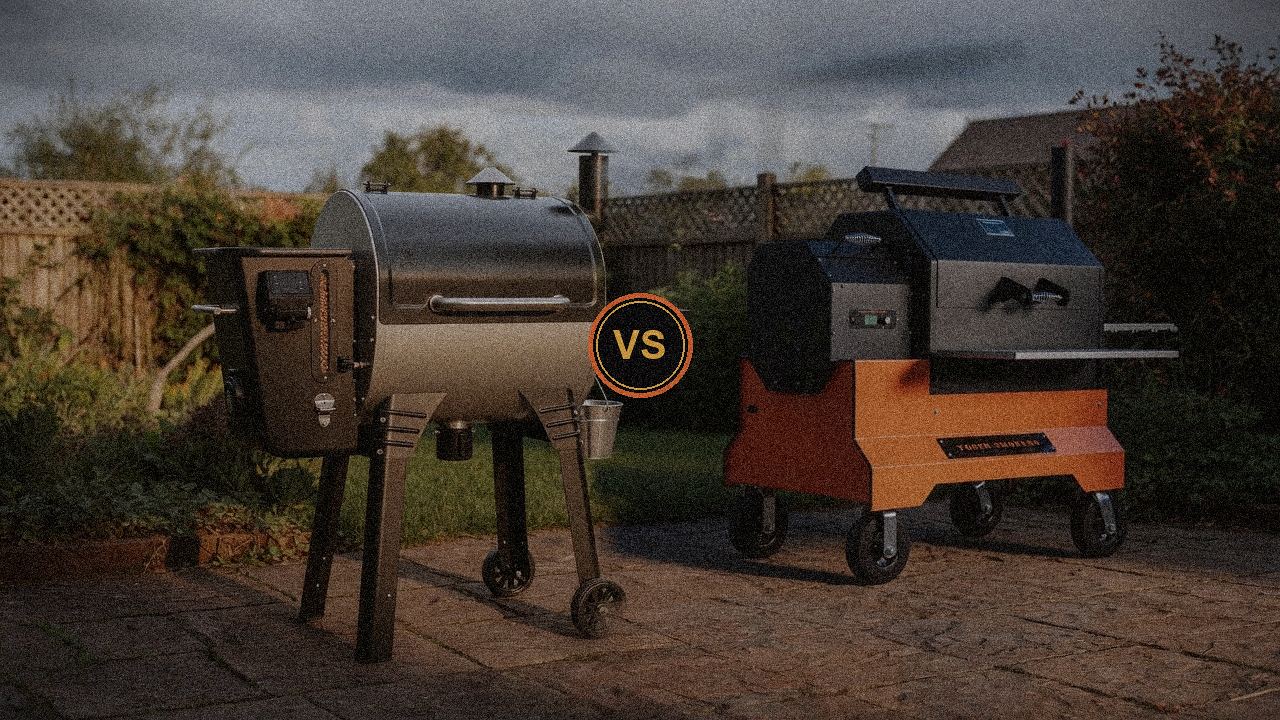
Camp Chef vs Yoder: The Smoke Tinkerer Against the Steel Tank
Camp Chef vs Yoder after a season on both: the Woodwind Pro's wood-chunk smoke box against the YS-series' perfect-10 build and 10-year warranty. Scores, owner complaints, warranty math, and who each brand is really for.
 By Oleg Galeev, cooking on pellet grills since 2020, runs the OleGrill YouTube channel
Short answer
Camp Chef wins on flavor per dollar. The Woodwind Pro's smoke box burns real wood chunks and scores 9/10 for smoke, the closest a pellet grill gets to stick-burner taste, for far less than Yoder money. Buy a Yoder YS480s or YS640s, from $2,249, when you want a perfect-10 build and a 10-year warranty.
Live prices. Affiliate links: we may earn a commission at no extra cost to you. How this works.
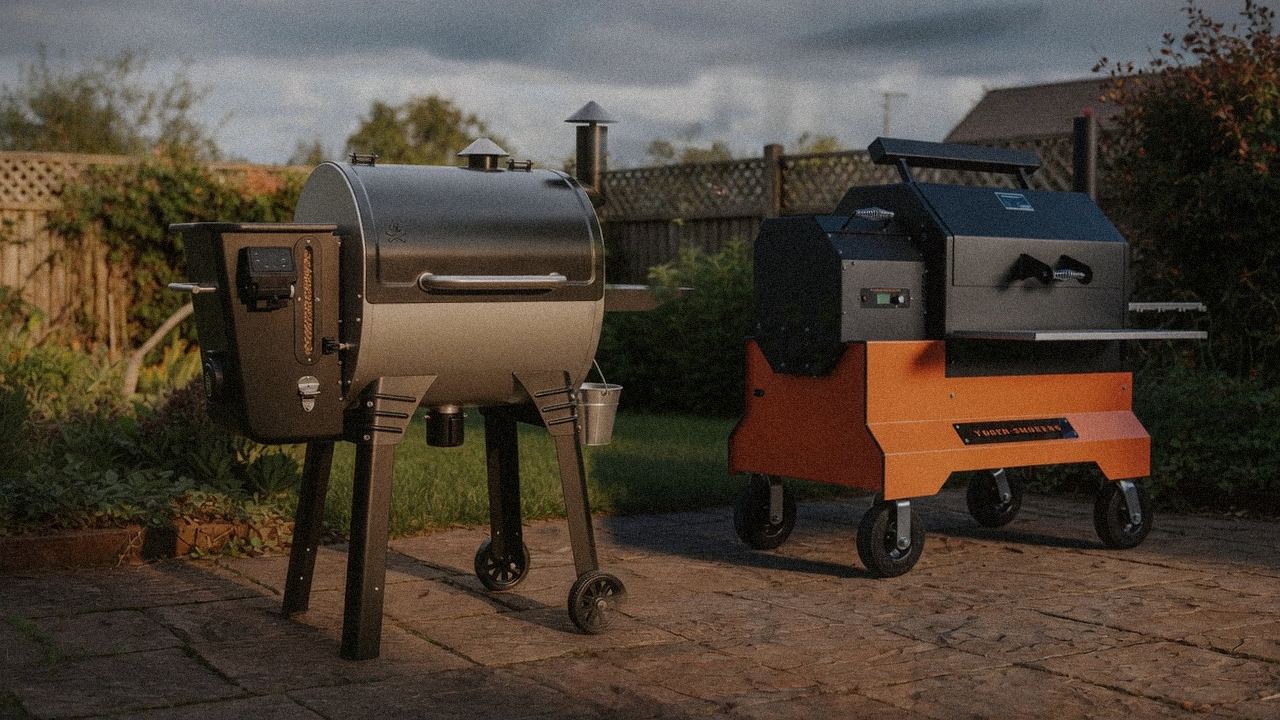
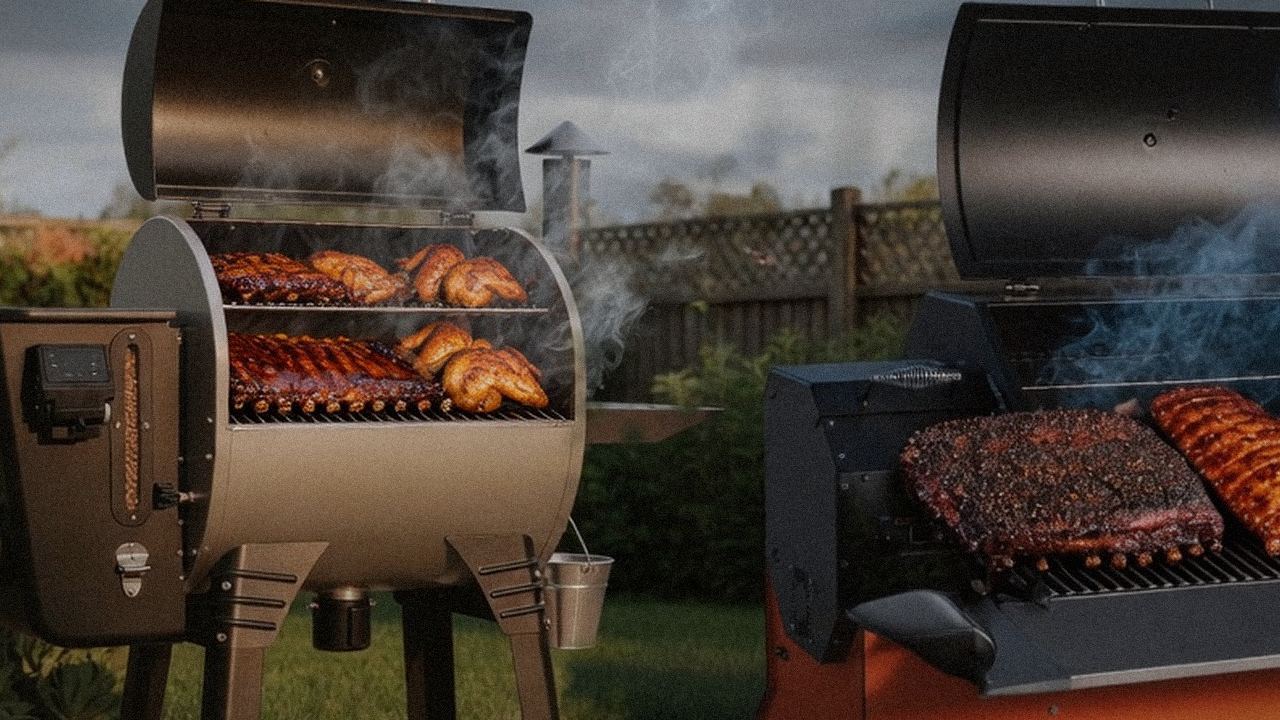
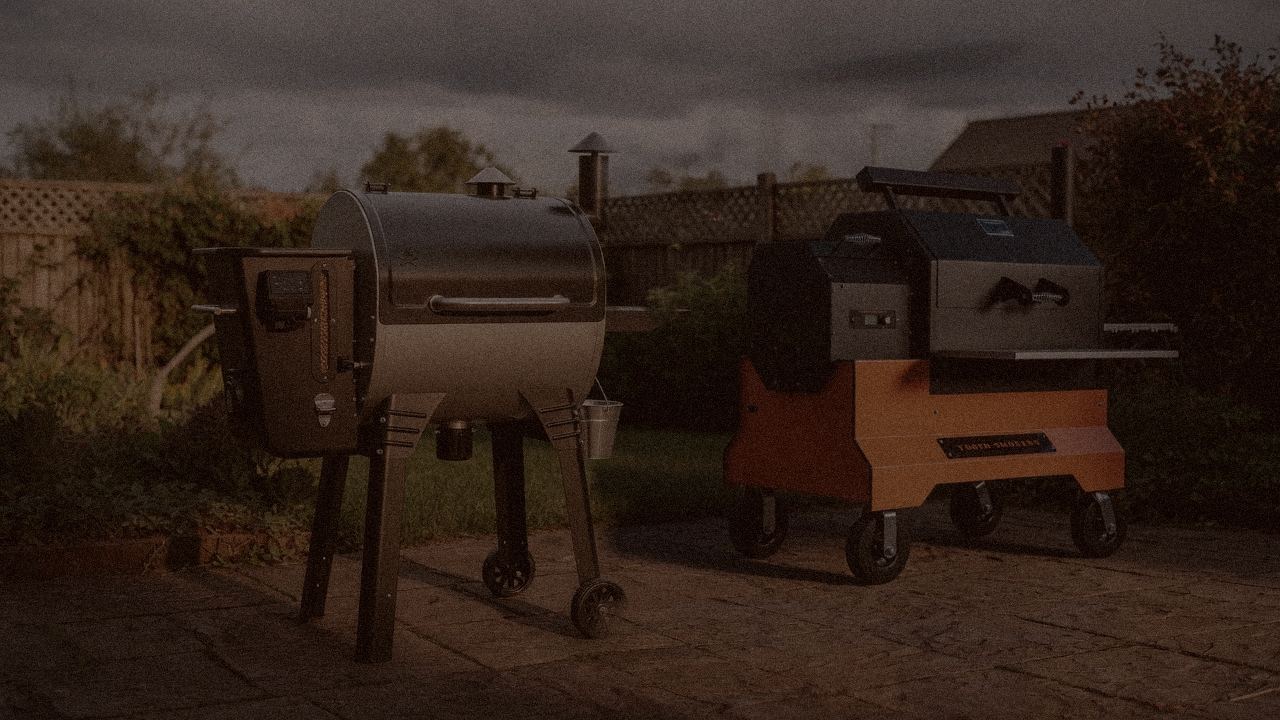
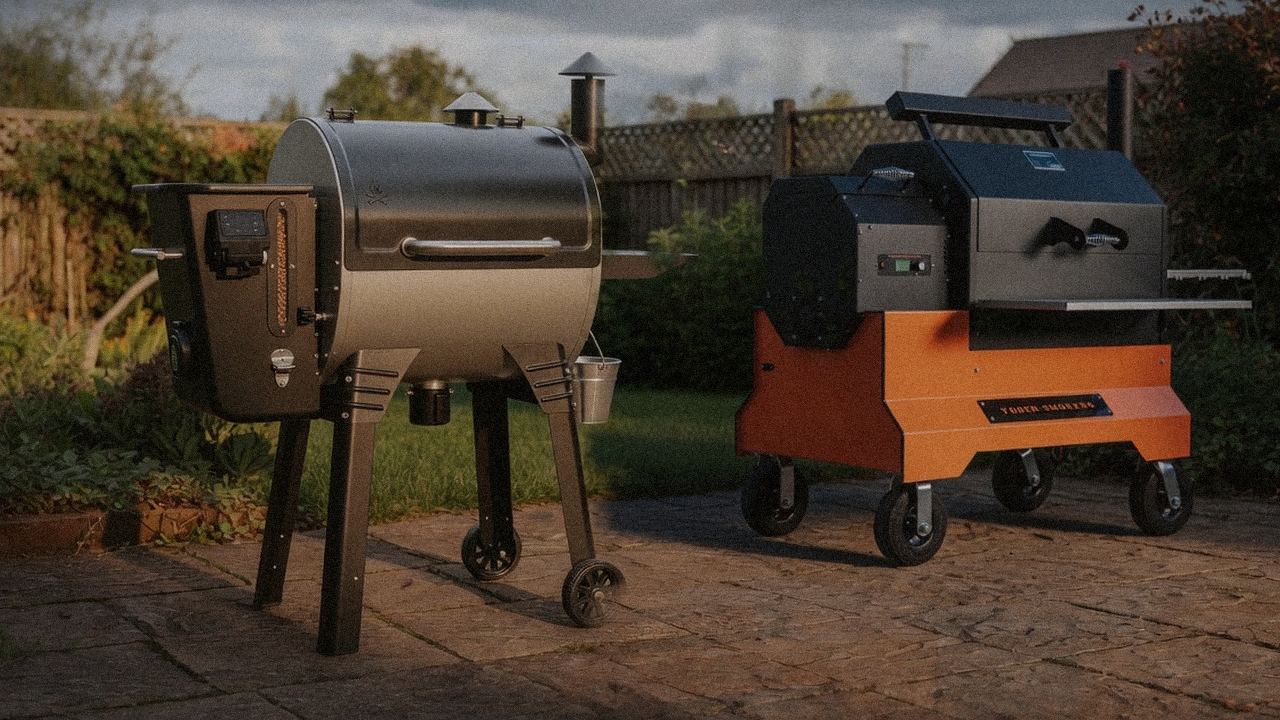
Delivery day settled half of this comparison before either grill was lit. The Yoder YS640s came on a freight pallet, and my hand truck wanted nothing to do with it. The Camp Chef Woodwind Pro arrived as a box of parts that ate most of an afternoon, exactly the lengthy assembly owner reviews had warned me about. By dusk, though, the Pro was pushing hickory-chunk smoke over the fence while the Yoder sat there looking like farm equipment. That's the matchup in one evening: one brand sells you a flavor instrument you play, the other sells you a machine you install for a decade. It is one of the matchups behind the best wood pellet grills rankings on this site.
Pull temps still follow the USDA safe minimum internal temperatures for poultry, pork, and ground beef, no matter which hopper you bought.
Warranty language is what Camp Chef's official site actually publishes, not a forum guess.
Camp Chef vs Yoder at a glance
Camp Chef's Woodwind line runs a 22 lb hopper, 500°F ceilings, WiFi, and a 3-year warranty, with the Woodwind Pro adding a wood-chunk smoke box nothing else here matches. Yoder answers at $2,249 and $2,699 with 20 lb hoppers, a 10-year warranty, and the only perfect build score on my sheet.
| Spec | Woodwind Pro 24 | Woodwind WiFi 24 | Yoder YS640s | Yoder YS480s |
|---|---|---|---|---|
| Price | - | - | $2,699 | $2,249 |
| Cooking area | - | 811 sq in | 1,070 sq in | 800 sq in |
| Hopper | 22 lb | 22 lb | 20 lb | 20 lb |
| Max temp | 500°F | 500°F | - | - |
| WiFi | Yes | Yes | Yes | Yes |
| Direct-flame sear | - | Yes | Yes | Yes |
| Warranty | 3 years | 3 years | 10 years | 10 years |
Camp Chef street prices bounce between retailers too much for me to print a figure I have not pinned down, so those cells stay dashes. What I can say without a price sheet: every grill in Camp Chef's column costs a fraction of the Yoder column. The two YS pits share identical guts and identical scores, so from here on "Yoder" means either one; pick between them on cooking area and budget.
Which holds temperature better?
Yoder, cleanly. The YS-series scored 9 for temperature accuracy and 9 for stability in my testing against 8 and 8 for every Camp Chef Woodwind I have run. Both brands hold a set point well enough for weekend cooks, but the Yoder's controller drifts less when wind, cold, or a 14-hour brisket leans on it.
| Test dimension | Woodwind Pro 24 | Woodwind 24 / 36 | Yoder YS640s / YS480s |
|---|---|---|---|
| Temp accuracy | 8 | 8 | 9 |
| Temp stability | 8 | 8 | 9 |
| App | 7.5 | 7.5 | 8 |
| Ease of use | 8 | 8 | 8 |
| Overall weighted score | not scored yet | not scored yet | 8.5 |
That last row needs the honesty treatment. The Yoders carry an 8.5 overall composite on my sheet; the Camp Chef models have per-dimension scores but no composite yet, and I will not invent one to make the table symmetrical. On the dimensions that exist, the pattern is consistent: an 8/8 Camp Chef is a good controller, a 9/9 Yoder is a great one. Neither is spotless in owner reports. Woodwind owners describe occasional controller failures and app connectivity dropouts on the forums, and Pro owners have logged isolated controller flicker at high temps, while some Yoder tests note a slight left-to-right gradient across the grates. The same 8-versus-9 controller gap decided my Camp Chef vs recteq matchup, so this is a brand trait, not one flukey unit.
Who makes more smoke?
Camp Chef, and this is the whole reason to buy one. The Woodwind Pro scores 9/10 for smoke, the highest figure in this matchup, because its smoke box smolders real wood chunks alongside the pellets. The Yoder's heavy firebox earns a very strong 8.5; the standard Woodwinds sit at a good 8.
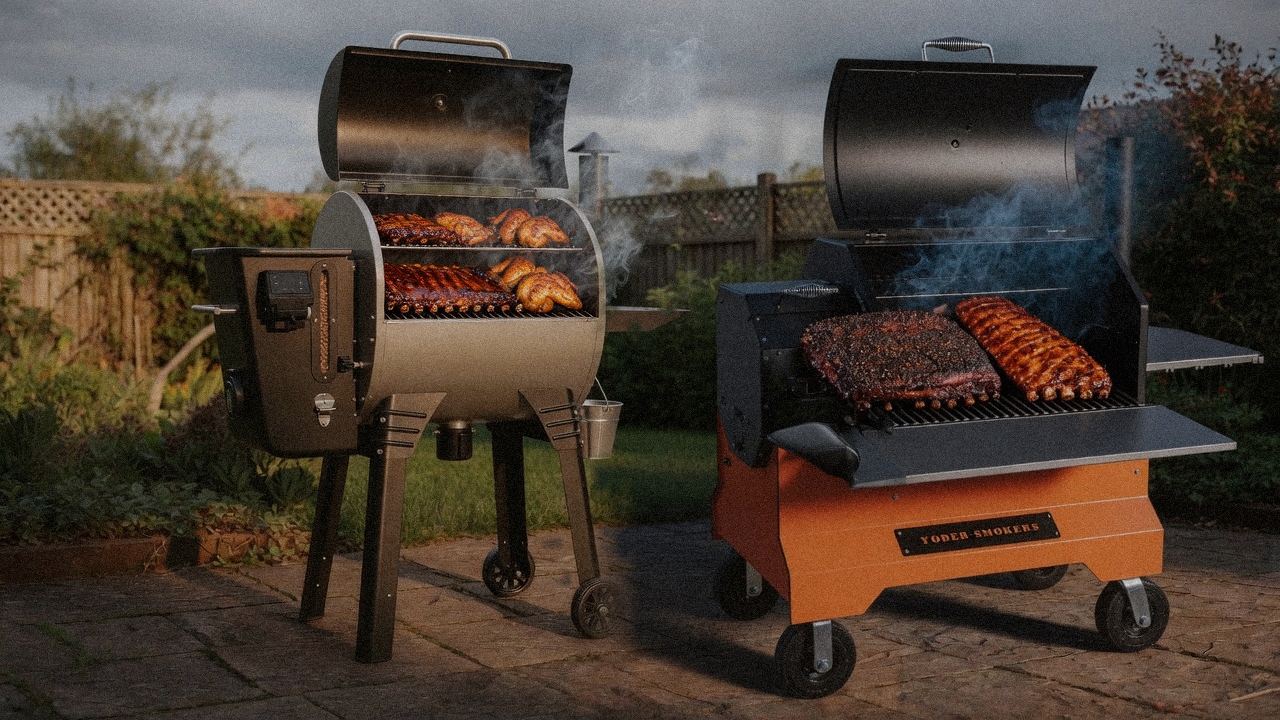
A pellet grill burns compressed sawdust efficiently, and efficient fire is clean fire, which is why pellet smoke runs lighter than what an offset makes. Yoder's answer is mass: all that steel holds a big, steady fire, and the 8.5 it earns is about as much smoke as a pure pellet burner produces. Camp Chef's answer is to stop being a pure pellet burner. Load the Pro's box with hickory or oak chunks and the output changes character entirely, heavier fumes, darker bark, the flavor that made my neighbor ask if I had bought an offset. My 9 for the Pro is the score that keeps stick-burner people circling it.
The trade is effort. The smoke box needs tending through the front half of a long cook, so the Pro turns set-and-forget back into something you check on. The Yoder asks nothing and pays for it at the pellet bag instead: its efficiency scored 7, and owners consistently report high pellet consumption on long cooks. Cleanup leans Camp Chef too, 8.5 against the Yoder's 7, and the pellet purge and ash cleanout draw genuine praise in owner reviews.
Which is built to last?
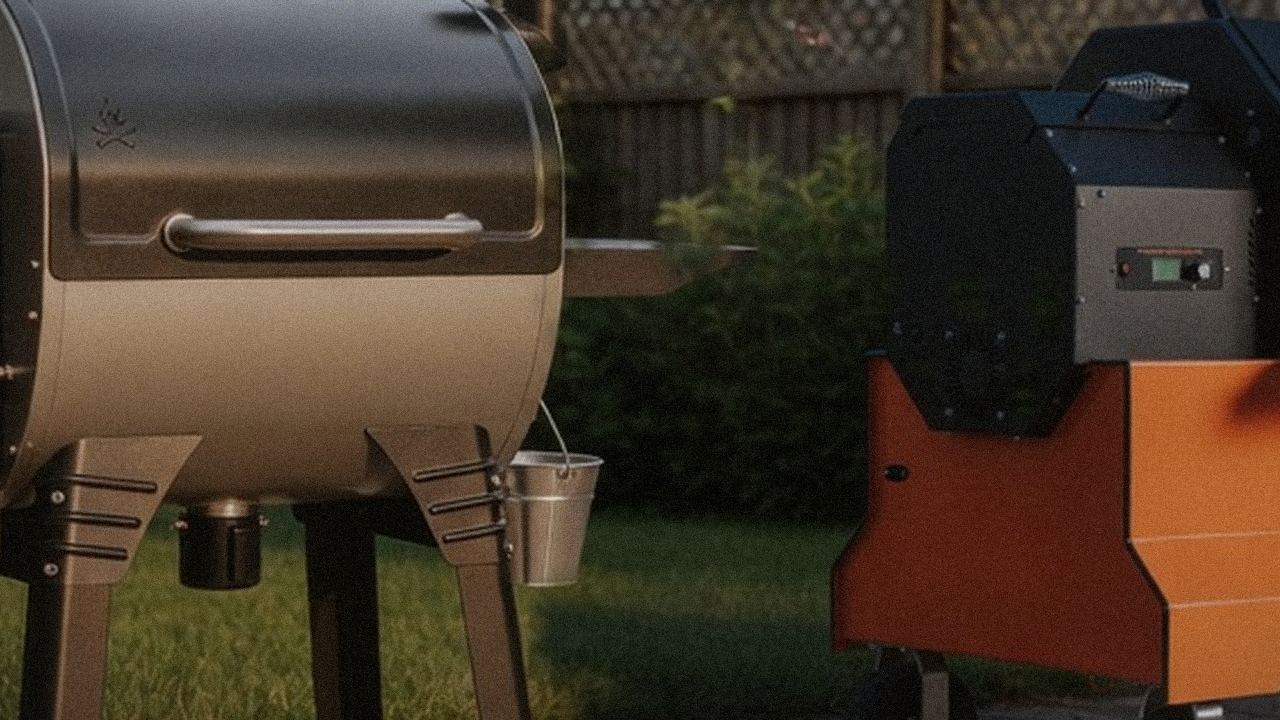
Yoder, and it is not a discussion. The YS-series scored a perfect 10 for build, the only 10 on my sheet, and carries a 10-year warranty on American-made steel. The Woodwind Pro's 8.5 build is genuinely stout for its class, but the standard Woodwinds sit at 7.5 and every Camp Chef gets just 3 years of coverage.
| Longevity factors | Camp Chef Woodwind line | Yoder YS-series |
|---|---|---|
| Build score | 7.5 (Woodwind 24/36), 8.5 (Pro) | 10 |
| Sear score | 8 (Woodwind 24/36) | 9 |
| Cleaning | 8.5 | 7 |
| Warranty | 3 years | 10 years |
A 10-year warranty is Yoder telling you it expects this pit to be cooking in 2036, and the welded steel underneath makes that believable. Two asterisks keep it honest. Heavy steel is not rust-proof steel: owners report rust on door and lid edges over time, and on paint, coating, and grates in humid or coastal areas, so budget for a cover and occasional touch-up. And a minority of owners report igniter, thermocouple, or electronics failures, the kind of ten-dollar parts a 10-year warranty exists to cover.
Camp Chef's asterisks worry me more because the coverage window is shorter. Home Depot and BBQGuys reviews of the Woodwind Pro include auger motor failures, probe issues, and warranty service described as slow and difficult. A 3-year warranty that is hard to use is worth less than its length suggests. The Pro's 8.5 build means the body will likely outlast those components; the question is who pays for the components, and after year three the answer is you. For a fight where the heavy-steel argument gets a real counterpuncher, see recteq vs Yoder, the closest anyone gets to Yoder's build for less.
What do owners actually complain about?
Camp Chef complaints cluster around electronics and service: controller glitches, app dropouts, auger motor and probe failures on the Pro, slow warranty claims, and long assembly. Yoder complaints are physical: surface rust in damp climates, heavy pellet use, occasional igniter failures, and a slight temp gradient.
The Camp Chef list, from owner forums and retailer reviews:
- Occasional controller failures and app connectivity dropouts across the Woodwind line
- Controller flicker or shutdown at high temps on isolated Woodwind Pro units
- Auger motor failures and probe issues on the Pro in retailer reviews
- Warranty service described as slow or difficult by some Pro owners
- Lengthy assembly, plus burn-in and pellet-feed quirks on new units
The Yoder list:
- Rust on door and lid edges after extended use, worse in humid or coastal areas
- Igniter, thermocouple, and electronics failures from a minority of owners
- High pellet consumption during long cooks
- Minor left-right or grate-to-grate unevenness in some tests
What does the value math say?
Yoder's math is a decade bet: $2.52 per square inch on the YS640s and $2.81 on the YS480s, brutal next to almost anything, but only $270 and $225 per warranty-covered year. Camp Chef's unprinted street prices sit far below either figure, with a third of the coverage.
| Value calculation | Yoder YS640s | Yoder YS480s |
|---|---|---|
| Price | $2,699 | $2,249 |
| Cooking area | 1,070 sq in | 800 sq in |
| Price per sq in | $2.52 | $2.81 |
| Warranty | 10 years | 10 years |
| Price per warranty year | $270 | $225 |
Read that table twice and it tells opposite stories. Per square inch, Yoder is one of the most expensive ways to cook in the whole category. Per covered year, a YS480s at $225 is cheaper insurance than plenty of grills half its price. The math only works if you actually keep the pit ten years, and Yoder owners generally do. Camp Chef flips every term: much less cash in, the smoke box the Yoder cannot answer, and a 3-year window on the electronics that owner reviews say you may have to fight to use. For flavor per dollar spent, the Woodwind Pro is my recommendation in this matchup, and it is not particularly close.
Which one should a first-timer buy?
The Camp Chef, with one caveat. The Woodwind Pro scores 8 for ease and 8.5 for cleaning, forgives mistakes, and teaches you what real smoke tastes like without offset babysitting. The caveat: a first-timer who ignores the smoke box owns a standard pellet grill that asked extra money for a feature going unused.
Nobody should spend $2,249 to find out whether they like pellet cooking. The Pro lets you learn on easy mode, then grow into the box as your cooks get longer and your bark standards get pickier. Fair warning on the wider market before you commit to either side of this fight: my overall top pick sits outside this matchup entirely. The Weber Searwood XL leads my full pellet grill rankings, and you can check the current price if you want the tested #1 rather than a specialist. How Weber's build argument fares against Kansas steel is its own story, which I cover in Weber vs Yoder.
Who should pay $2,249 or more for the Yoder?
Three cooks: the one buying a single grill for the next decade, the one who wants competition-grade American steel with real direct-flame searing at a 9, and the one done replacing controllers and auger motors on lighter machines. If you upgrade grills every few years, the Yoder premium mostly buys steel you'll sell.
What the Yoder money does not buy is more smoke than a tended Woodwind Pro; my scores say the Pro's 9 beats the Yoder's 8.5 when you feed the box. What it buys is the 10 build, the 9/9 controller, the 9 sear, and ten years of a manufacturer standing behind all of it at $225 to $270 a year. That is a legitimately great deal for the right buyer, and the right buyer already knows the exact spot on the patio where this thing will sit until the 2030s. Get the cover, though. Rust in damp climates is the one enemy the warranty math does not touch.
How do they score on our weighted test method?
Every grill on this site runs the same ten-part method, weighted by what actually changes your food. Here is Camp Chef Woodwind WiFi 24 against Yoder Smokers YS640s, row by row, with the weight each test carries.
| Test | Weight | Camp Chef Woodwind WiFi 24 | Yoder Smokers YS640s |
|---|---|---|---|
| Temperature accuracy | 15% | 8/10 | 9/10 |
| Temperature stability | 15% | 8/10 | 9/10 |
| Smoke production | 15% | 8/10 | 8.5/10 |
| Build quality | 10% | 7.5/10 | 10/10 |
| Searing ability | 10% | 8/10 | 9/10 |
| Ease of use | 10% | 8/10 | 8/10 |
| Cleaning | 10% | 8.5/10 | 7/10 |
| App / controller | 5% | 7.5/10 | 8/10 |
| Pellet efficiency | 5% | n/a | 7/10 |
| Value | 5% | 8/10 | 8/10 |
| Weighted total | 100% | not yet complete | 8.5/10 |
Our ten-part weighted method, scored from verified research and bench work. Higher wins each row; a weighted total prints only when all ten dimensions are settled. Full protocol on how we test.
Verdict: Camp Chef or Yoder?
Camp Chef wins on flavor per dollar. The Woodwind Pro's smoke box delivers stick-burner-adjacent flavor, a 9 against Yoder's 8.5, for far less money, and that is the trade most backyard cooks should take. Yoder wins the decade: a perfect 10 build, 9/9 temp control, and a 10-year warranty from $2,249.
I want the honest frame on the record. The Yoder is the better machine. It holds temperature tighter, sears harder, and is built like nothing else I have scored. But this site measures grills against the money they ask, and the Pro produces the best smoke in this matchup while leaving well over a thousand dollars in your pocket for pellets, chunks, and briskets. The tinkerer beats the tank on points. The tank is still standing in ten years. Decide which sentence describes you, and you have your grill.
Is Yoder better than Camp Chef?
Yoder is the better-built machine: 9/9 temperature scores, a perfect 10 for build, a 9 for searing, and a 10-year warranty against Camp Chef's 3. Camp Chef is the better value, and the Woodwind Pro out-smokes the Yoder 9 to 8.5 thanks to its wood-chunk smoke box. Most backyard cooks get more happiness per dollar from the Camp Chef.
Does the Woodwind Pro really make more smoke than a Yoder?
Yes, when you use the box. The Woodwind Pro scored 9/10 for smoke because it smolders real wood chunks alongside pellets, while the Yoder YS-series scored a strong 8.5 from its pellet fire alone. The catch is effort: the Pro's box needs tending during long cooks, and an untended Pro cooks like a standard 8-smoke pellet grill.
How long does a Yoder pellet grill last?
Yoder backs the YS480s and YS640s with a 10-year warranty, and the heavy welded American steel has a reputation for outliving it. The realistic maintenance items owners report are surface rust on door and lid edges in humid climates and occasional igniter or thermocouple replacements, not structural failure.
Are Camp Chef pellet grills reliable?
Mostly, with electronics as the weak spot. Owner forums report occasional controller failures and app connectivity dropouts across the Woodwind line, and retailer reviews of the Woodwind Pro mention auger motor and probe failures, with warranty service that some owners found slow. The bodies hold up well; the 3-year warranty window is the real limit.
Which has the better warranty, Camp Chef or Yoder?
Yoder, by a wide margin: 10 years on the YS480s and YS640s against 3 years on every Camp Chef Woodwind. Per covered year the Yoders work out to $225 and $270. Camp Chef's shorter coverage matters more because owner-reported failures cluster in electronics, exactly the parts most likely to need a claim.