Weber vs Yoder: Our Tested #1 Against a Quarter Inch of Kansas Steel
Weber Searwood XL vs Yoder YS640s and YS480s: temperature and smoke scores, build quality, warranty math, and price per square inch from side-by-side cooks. Who wins, and who should still pay double.
 By Oleg Galeev, cooking on pellet grills since 2020, runs the OleGrill YouTube channel
Short answer
The Weber Searwood XL wins for most cooks: $1,299 buys 972 square inches, 600°F direct-flame searing, and our tested #1 pellet grill. The Yoder YS640s actually scores higher, 8.5 vs 7.9, on quarter-inch American steel with a 10-year warranty. Buy the Yoder for a decade-long pit; buy the Weber for everything else.
Live prices. Affiliate links: we may earn a commission at no extra cost to you. How this works.
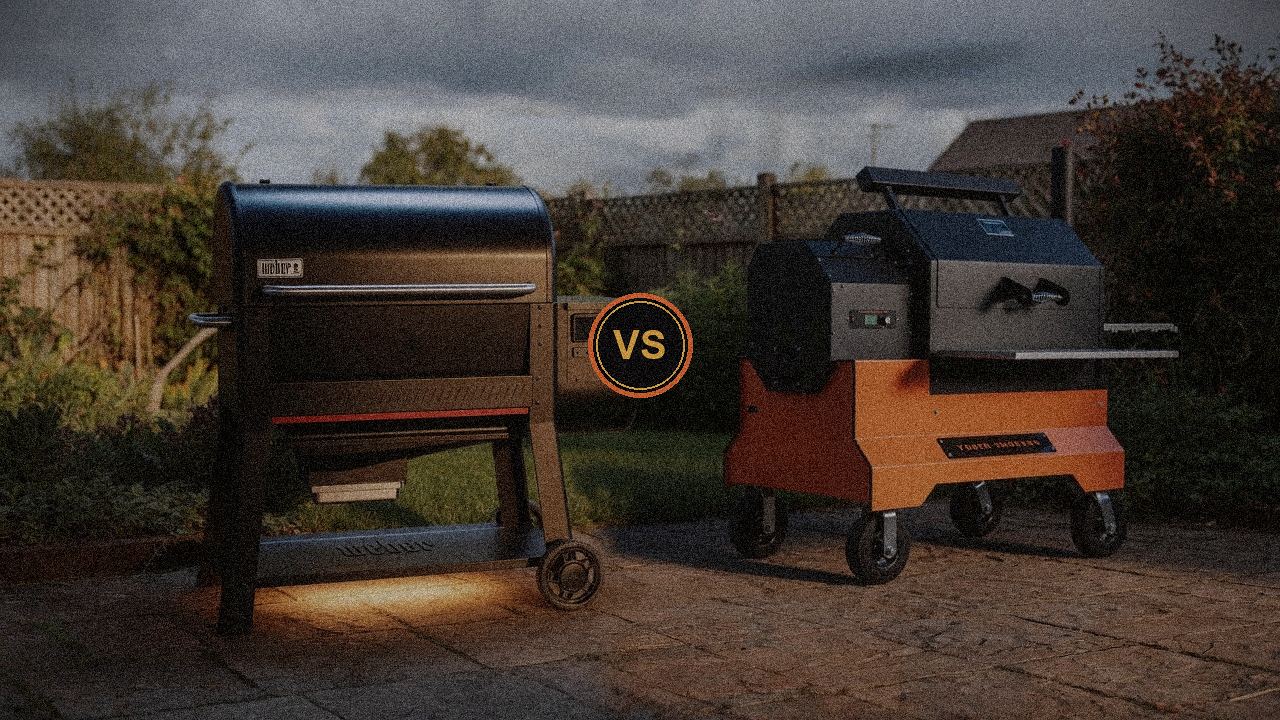
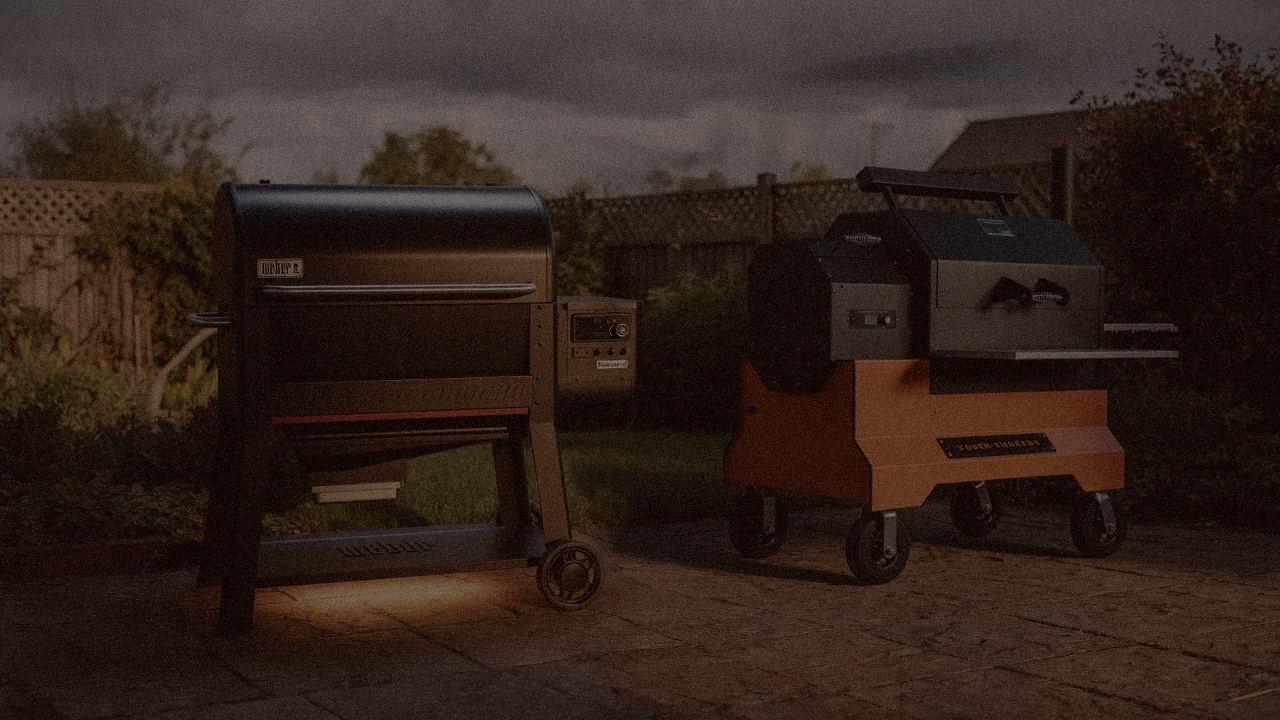
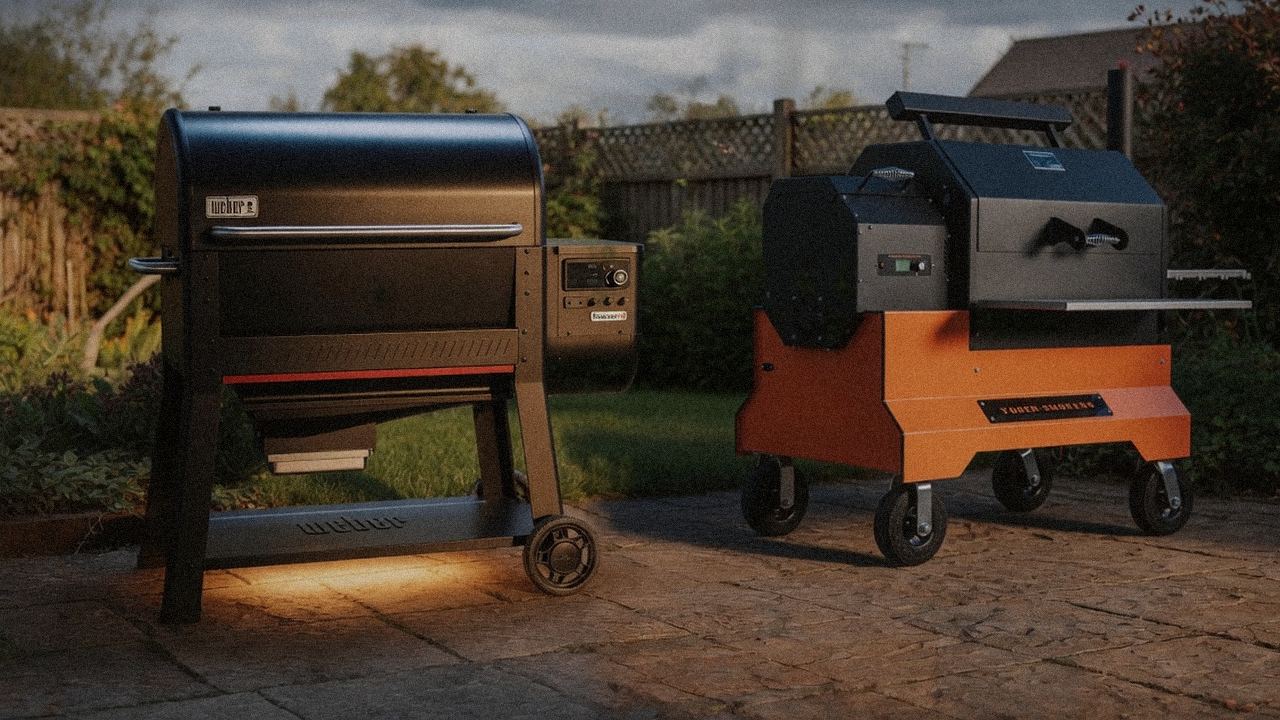
I can move my Searwood XL across the deck with one hand while holding a beer. The Yoder YS640s took two of us and a ramp, and the tailgate sagged when we loaded it. That's the whole matchup in one afternoon: Weber builds a clever, livable grill for normal people, and Yoder builds a quarter-inch-steel slab for people who plan to will theirs to their kids. I've cooked on both for a season, and the honest answer to which is "better" depends entirely on what you think a grill is for. It is one of the matchups behind the best wood pellet grills rankings on this site.
Pull temps still follow the USDA safe minimum internal temperatures for poultry, pork, and ground beef, no matter which hopper you bought.
Warranty language is what Weber's support pages actually publishes, not a forum guess.
Weber vs Yoder at a glance
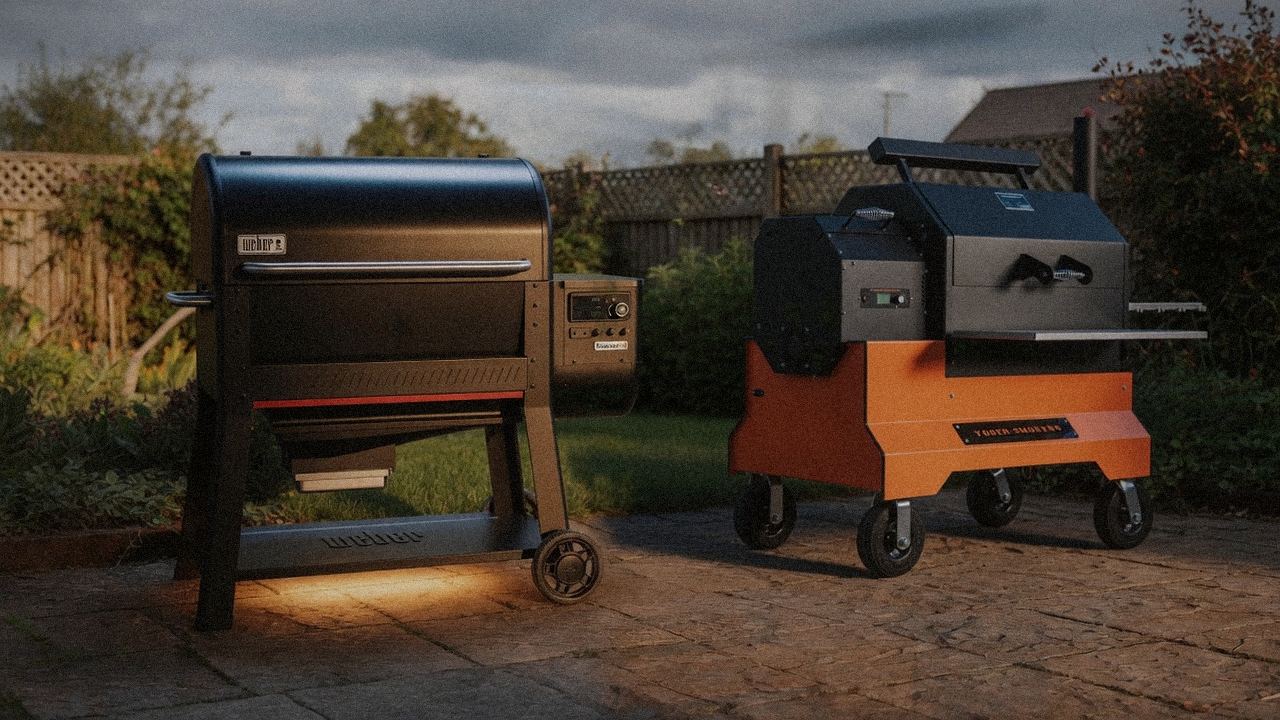
The Weber Searwood XL sells for $1,299 against $2,699 for the Yoder YS640s and $2,249 for the smaller YS480s. Weber gives you nearly the YS640s's cooking area for less than half the money. Yoder answers with a perfect 10 build score, richer smoke, and double the warranty.
| Spec | Weber Searwood XL | Yoder YS640s | Yoder YS480s |
|---|---|---|---|
| Price | $1,299 | $2,699 | $2,249 |
| Cooking area | 972 sq in | 1,070 sq in | 800 sq in |
| Hopper | 20 lb | 20 lb | 20 lb |
| Max temp | 600°F | - | - |
| WiFi | Yes | Yes | Yes |
| Direct sear | Yes | Yes | Yes |
| Warranty | 5 years | 10 years | 10 years |
Two notes on the table. Weber also makes the standard Searwood 600 at $999 with 648 square inches and otherwise identical guts, so read "Searwood" here as either size. And the two Yoders share the same scores in our testing, so pick between YS640s and YS480s on cooking area and budget alone.
Which holds temperature better?
The Yoder, cleanly. Both YS pits scored 9 for temperature accuracy and 9 for stability in our testing against the Searwood XL's 8 and 8. All that thermal mass is doing real work: a quarter inch of steel shrugs off wind and lid lifts that make lighter grills scramble.
| Test dimension | Weber Searwood XL | Yoder YS640s / YS480s |
|---|---|---|
| Temp accuracy | 8 | 9 |
| Temp stability | 8 | 9 |
| Overall score | 7.9 | 8.5 |
Print the overall line honestly and the Yoder wins it, 8.5 to 7.9. So why does the Searwood XL hold the #1 rank on our pellet grills list while the Yoder doesn't? Because rank is the tested editorial pick and score is the weighted measure. The Yoder piles up points on build and smoke; the Weber wins ease, app, and value, and at half the price those wins count double in a recommendation.
Neither pit is flawless at holding heat. Some Yoder tests note a slight left-to-right gradient across the grates. Searwood owners in cold climates report occasional pellet flow hiccups in winter, and both my grills read close enough to setpoint that I cook to the probe, not the dial.
Who makes more smoke?
Yoder, and this is the widest performance gap in the matchup: 8.5 for smoke against the Searwood's 7.3. On a packer brisket the Yoder's bark comes out darker and the flavor runs deeper. The Weber makes a proper ring at 225°F, it just doesn't linger the same way.
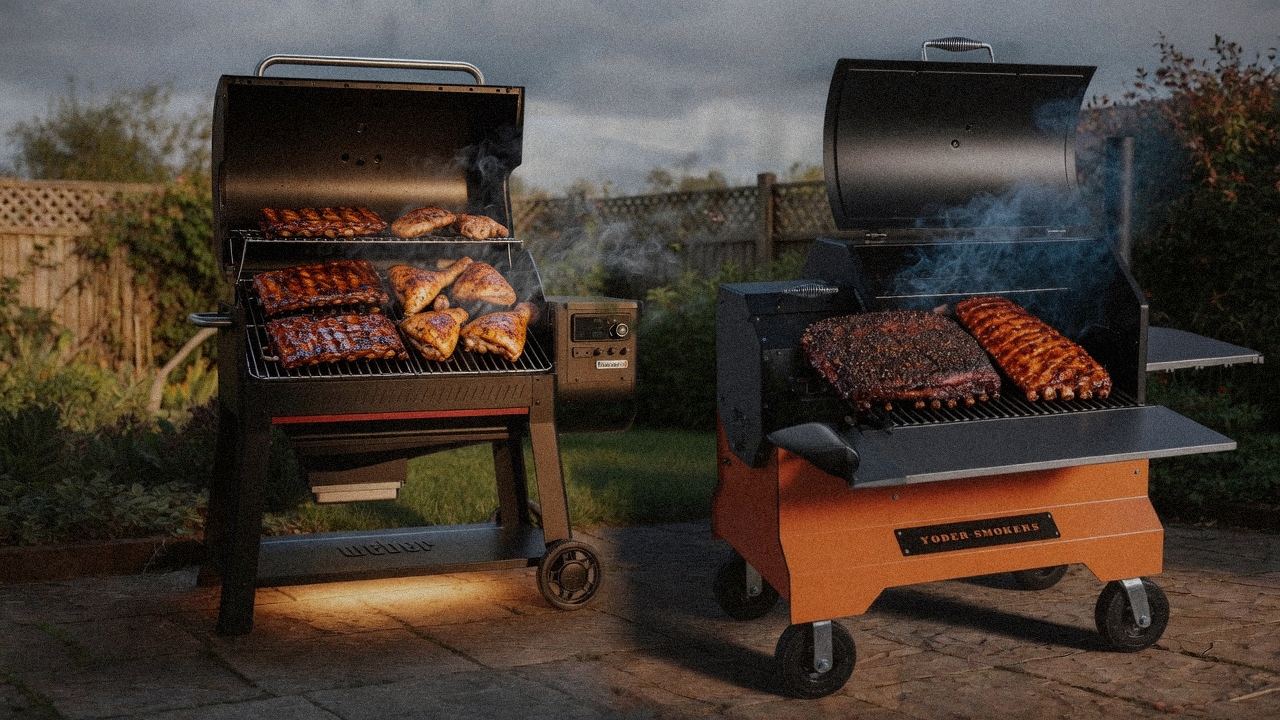
More than a point of smoke is something you can taste blind. On hot-and-fast chicken or burgers the difference mostly disappears, because short cooks don't give either pit time to show off. On ribs and brisket it's real. A pellet grill meters fuel to hold a setpoint, so none of them smoke like a stick burner, but the Yoder's heavier fire gets closer than almost anything we've scored. Traeger fans should see how that same fire fares in my Traeger vs Yoder piece; the pattern repeats.
The bill for that fire arrives in the hopper. Both brands scored 7 for efficiency, and Yoder owners consistently flag high pellet use on long cooks, so budget bags accordingly either way.
Which is built to last?
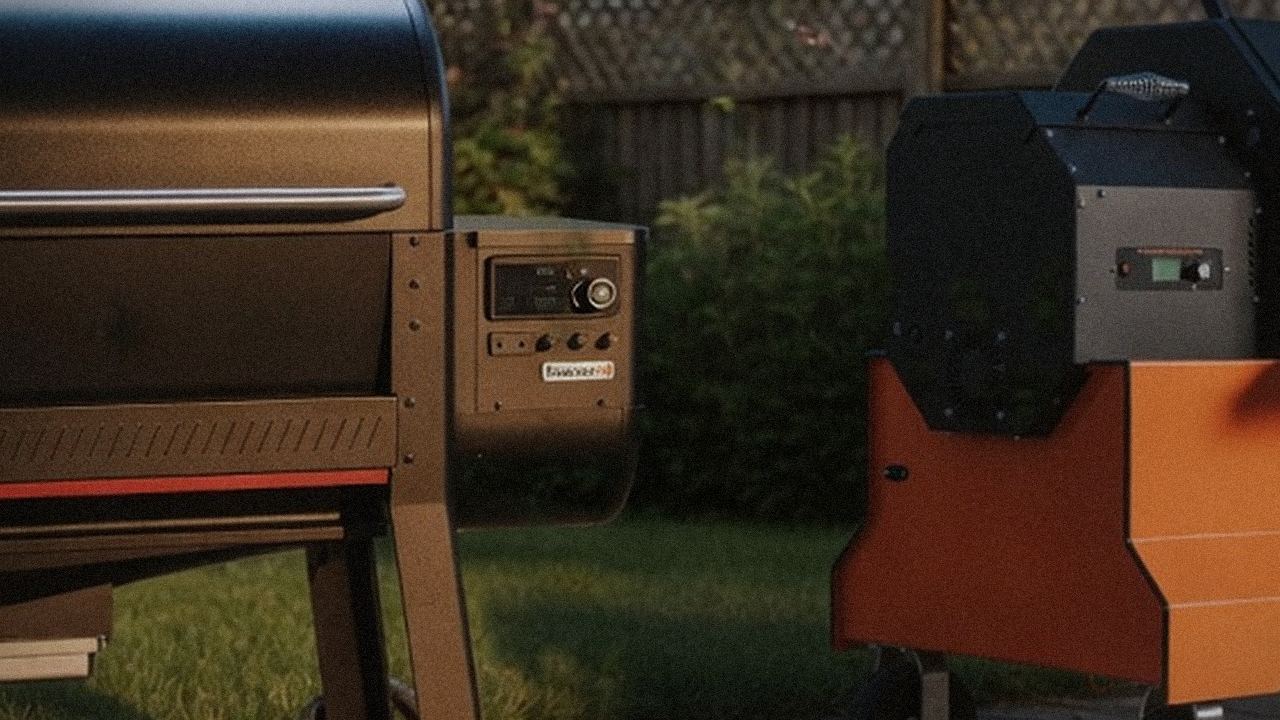
The Yoder, and it isn't a debate. The YS-series scored a perfect 10 for build, the only 10 we've recorded, on quarter-inch American steel welded in Kansas and backed by a 10-year warranty. The Searwood XL's 8 is solid porcelain-coated engineering with half the warranty and a fraction of the mass.
| Build and durability | Weber Searwood XL | Yoder YS-series |
|---|---|---|
| Build score | 8 | 10 |
| Sear score | 8.3 | 9 |
| Cleaning | 7.3 | 7 |
| Warranty | 5 years | 10 years |
The Yoder is competition equipment sold to backyards. The same construction shows up at contests, and a 10-year warranty is Yoder telling you it expects this pit cooking in 2036. Two honest caveats come straight from owners: heavy steel is not rust-proof steel, so door and lid edges pick up rust over time, and paint, coating, and grates suffer in humid or coastal air. A cover and yearly touch-up are part of the deal. So is parking it, because nobody enjoys moving 300-plus pounds of Kansas.
Weber's build story is different but not weak. An 8 with a 5-year warranty from the biggest name in American grilling is a safe bet, and Weber's dealer and parts network is nobody's worry. On searing, the Yoder's direct-flame access earns a 9 against the Weber's 8.3, but the convenience tilts back: the Searwood hits its 600°F sear mode with a dial turn and no grate surgery, which is why steak night lands on the Weber at my house more often than the score gap suggests.
Which is easier to live with day to day?
The Weber, clearly. The Searwood XL scored 8.7 for ease of use and 8.7 for app quality against the Yoder's 8 and 8. Both run WiFi as standard, but Weber Connect is the more polished software, and the whole grill is lighter to clean, move, and feed.
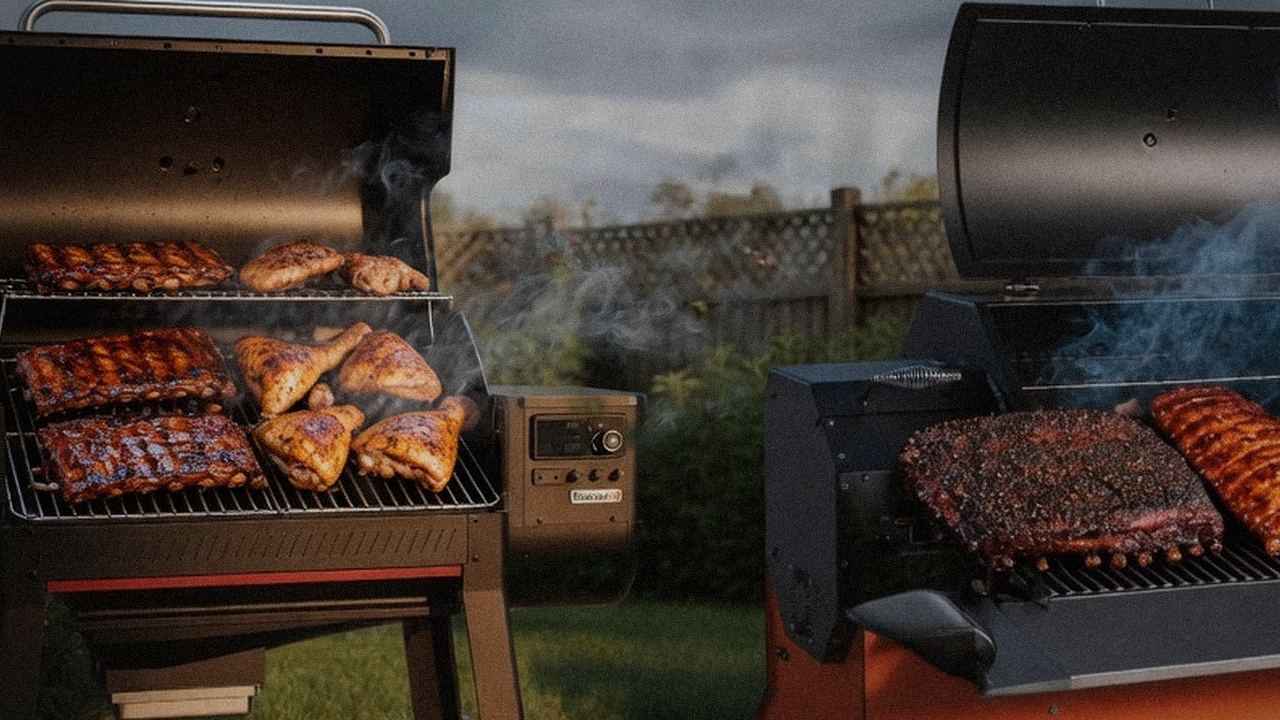
Livability is where a $1,299 grill beating a $2,699 grill stops sounding strange. The Searwood starts fast, its app has given me fewer reasons to swear at my phone, and cleaning scored 7.3 to the Yoder's 7. None of these gaps is huge on its own. Added up across a season of Tuesday cooks, they're the difference between a grill you use and a grill you plan around. The Yoder asks for a little ceremony. The Weber doesn't.
What do owners actually complain about?
Searwood complaints center on ash blowback into food, E10 error codes with fussy resets, and auger or reset issues after power loss. Yoder complaints are rust in damp climates, occasional igniter or thermocouple failures, and heavy pellet consumption. Neither list is a dealbreaker; both are worth knowing before checkout.
The Weber Searwood XL list, from owner reports:
- Ash blowback into food at high heat
- E10 error codes and reset difficulties, occasionally after power loss
- Side tables sold separately at this price
- Pellet flow hiccups in cold weather, noted in owner forums
The Yoder YS-series list:
- Rust on door and lid edges after extended use, worse in humid or coastal areas
- Igniter and thermocouple failures reported by a minority of owners
- High pellet consumption on long cooks
- Minor grate-to-grate unevenness in some owner experiences
What does the value math say?
Weber, by a mile. The Searwood XL costs $1.34 per square inch of cooking area; the YS640s costs $2.52 and the YS480s $2.81. Even warranty math only softens the blow: $260 per covered year for the Weber against $270 for the YS640s and $225 for the YS480s.
| Value math | Weber Searwood XL | Yoder YS640s | Yoder YS480s |
|---|---|---|---|
| Price | $1,299 | $2,699 | $2,249 |
| Cooking area | 972 sq in | 1,070 sq in | 800 sq in |
| Price per sq in | $1.34 | $2.52 | $2.81 |
| Warranty | 5 yr | 10 yr | 10 yr |
| Price per warranty year | $260 | $270 | $225 |
The square-inch line is brutal for Yoder: the YS640s gives you about 10 percent more grate than the Searwood XL for 108 percent more money. Warranty framing is Yoder's best light, and the YS480s does come out cheapest per covered year, but that math only pays if the pit actually stays in your yard for the decade. Keep grills ten years and the Yoder premium spreads thin. Upgrade every five and you've paid double for smoke and steel you'll sell on. For most cooks, most budgets, most Tuesdays, the Searwood XL is the recommendation.
Which one should a first-timer buy?
The Weber, without hesitation. Its 8.7 ease-of-use score, friendlier app, and one-dial sear mode flatten the learning curve, and the $950 to $1,400 you keep buys a year of meat and pellets. A first-timer doesn't yet know whether they'll want a decade-long pit.
The Searwood XL is our overall #1 for exactly this buyer, and it happens to be the grill in this fight I'd buy again, so check the current price and compare it against the recteq vs Weber matchup if you want to see the XL fight a grill in its own price class. One honest wrinkle for the nervous shopper: Weber's SmokeFire, the Searwood's discontinued predecessor, earned real firepot and temperature complaints before Weber pulled it. The Searwood is a different design, its owner reports read nothing like SmokeFire's, and the 5-year warranty applies either way, but you deserve to know the history exists.
Who should spend the extra $1,400 on the Yoder?
Three buyers: the cook keeping one pit for the next decade, the serious smoker chasing that 8.5 smoke score and 9 for direct-flame searing, and the buy-American purchaser who wants quarter-inch steel welded in Kansas. If none of those is you, the premium buys prestige, not performance you'll use.
What the extra money genuinely buys is measurable: a point of temp accuracy and stability, more than a point of smoke, a perfect build score, five extra warranty years. What it doesn't buy is a better app, easier cleaning, or a nicer Tuesday. The Yoder also demands upkeep the spec sheet hides, because rust in damp climates is the one complaint that follows the YS-series everywhere. If you read that list and felt the pull anyway, you're the Yoder buyer, and my recteq vs Yoder comparison shows how the Kansas pit handles a value fighter with a bigger hopper.
How do they score on our weighted test method?
Every grill on this site runs the same ten-part method, weighted by what actually changes your food. Here is Weber Searwood XL 600 against Yoder Smokers YS640s, row by row, with the weight each test carries.
| Test | Weight | Weber Searwood XL 600 | Yoder Smokers YS640s |
|---|---|---|---|
| Temperature accuracy | 15% | 8/10 | 9/10 |
| Temperature stability | 15% | 8/10 | 9/10 |
| Smoke production | 15% | 7.3/10 | 8.5/10 |
| Build quality | 10% | 8/10 | 10/10 |
| Searing ability | 10% | 8.3/10 | 9/10 |
| Ease of use | 10% | 8.7/10 | 8/10 |
| Cleaning | 10% | 7.3/10 | 7/10 |
| App / controller | 5% | 8.7/10 | 8/10 |
| Pellet efficiency | 5% | 7/10 | 7/10 |
| Value | 5% | 8/10 | 8/10 |
| Weighted total | 100% | 7.9/10 | 8.5/10 |
Our ten-part weighted method, scored from verified research and bench work. Higher wins each row; a weighted total prints only when all ten dimensions are settled. Full protocol on how we test.
Verdict: Weber or Yoder?
The Weber Searwood XL wins this comparison for most people: 972 square inches, 600°F searing, the best app in the matchup, and our tested #1 rank at $1,299. The Yoder YS-series wins the score sheet at 8.5 vs 7.9 and remains the right buy for decade-minded cooks who want American competition steel.
I want to be plain about the split verdict. The Yoder is the better-performing, better-built object; printed honestly, it outscores our top pick. The Weber is the better purchase, because a grill you'll actually light twice a week at half the price beats a monument you had to justify. Mainstream champion, American heavyweight. Know which fight you're in, and the winner picks itself.
Is Yoder better than Weber for pellet grills?
Yoder scores higher in our testing, 8.5 vs 7.9, with better temperature control, more smoke, and a perfect 10 build score on quarter-inch American steel. Weber's Searwood XL is still our #1 tested pick because it delivers most of that performance with a better app and easier ownership at $1,299 against $2,699.
How long does a Yoder YS640s last?
Yoder backs the YS640s with a 10-year warranty, and the heavy welded steel is built for a decade-plus of service. The maintenance items owners actually report are surface rust on door and lid edges in humid climates and occasional igniter or thermocouple replacements, not structural failure.
Is the Weber Searwood XL reliable?
Broadly yes. It scored 8 for build with a 5-year warranty, and it holds our #1 tested rank. The complaints owners raise are ash blowback into food at high heat, occasional E10 error codes with fussy resets after power loss, and pellet flow hiccups in cold weather, all annoyances rather than failures.
Which sears better, the Searwood XL or a Yoder?
The Yoder scored 9 for searing against the Searwood XL's 8.3, so it wins on results. The Weber wins on convenience: its 600°F direct-flame mode is a dial turn away, which is why quick steak nights favor the Searwood even though the Yoder produces the stronger sear.
Is a Yoder worth double the price of a Weber Searwood?
Only for a specific buyer. Per square inch the Yoder costs roughly twice as much, $2.52 vs $1.34, but per warranty year the YS480s is actually cheapest at $225. If you'll keep one pit for ten years and value smoke, steel, and made-in-USA construction, yes. For everyone else the Searwood XL is the smarter spend.