Green Mountain vs Z Grills: The Cheap-Seats Fight Nobody Referees
Green Mountain vs Z Grills after cooking on both: temperature scores, WiFi reality, rust and igniter complaints, and the value math that picks the budget winner.
 By Oleg Galeev, cooking on pellet grills since 2020, runs the OleGrill YouTube channel
Short answer
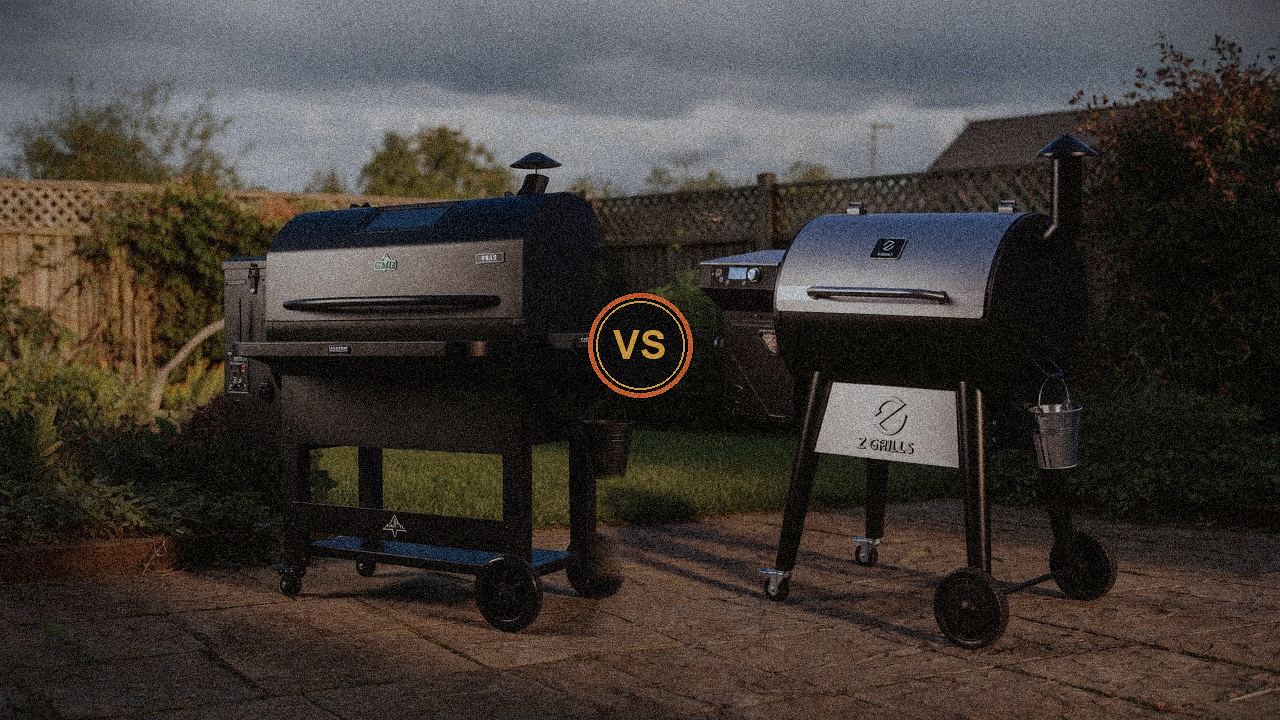
Z Grills takes this one for the patio starter: lower entry price, one-dial simplicity, and the best value scores I have logged, a 9/10 on the 700 Series. Green Mountain answers with WiFi standard on every model, a 550°F ceiling, and the genuinely portable Trek. Pick GMG only if app control matters at this price.
Live prices. Affiliate links: we may earn a commission at no extra cost to you. How this works.
The GMG Trek rides in the bed of my truck with one bungee cord over the lid, and it rattles less than my cooler does. The Z Grills 450A on my patio cannot do that trick. What it can do is light on the first try, every time, without asking me to pair anything. I ran both brands on the same bags of pellets this summer, and the fight came down to a question neither prints on the box: do you want a phone in your hand while you cook? It is one of the matchups behind the best wood pellet grills rankings on this site.
These are the two budget brands shoppers cross-shop when Pit Boss feels like too much barrel and Traeger feels like too much logo.
Pull temps still follow the USDA safe minimum internal temperatures for poultry, pork, and ground beef, no matter which hopper you bought.
Warranty language is what Z Grills' warranty policy actually publishes, not a forum guess.
What separates Green Mountain and Z Grills on paper?
Green Mountain ships WiFi on every current model, hits 550°F, and sells the only true portable in this matchup, the $399 Trek. Z Grills counters with bigger verified cooking areas, a simpler dial-driven controller, no app to babysit, and the strongest value scores in my logs. Both brands back everything with 3 years.
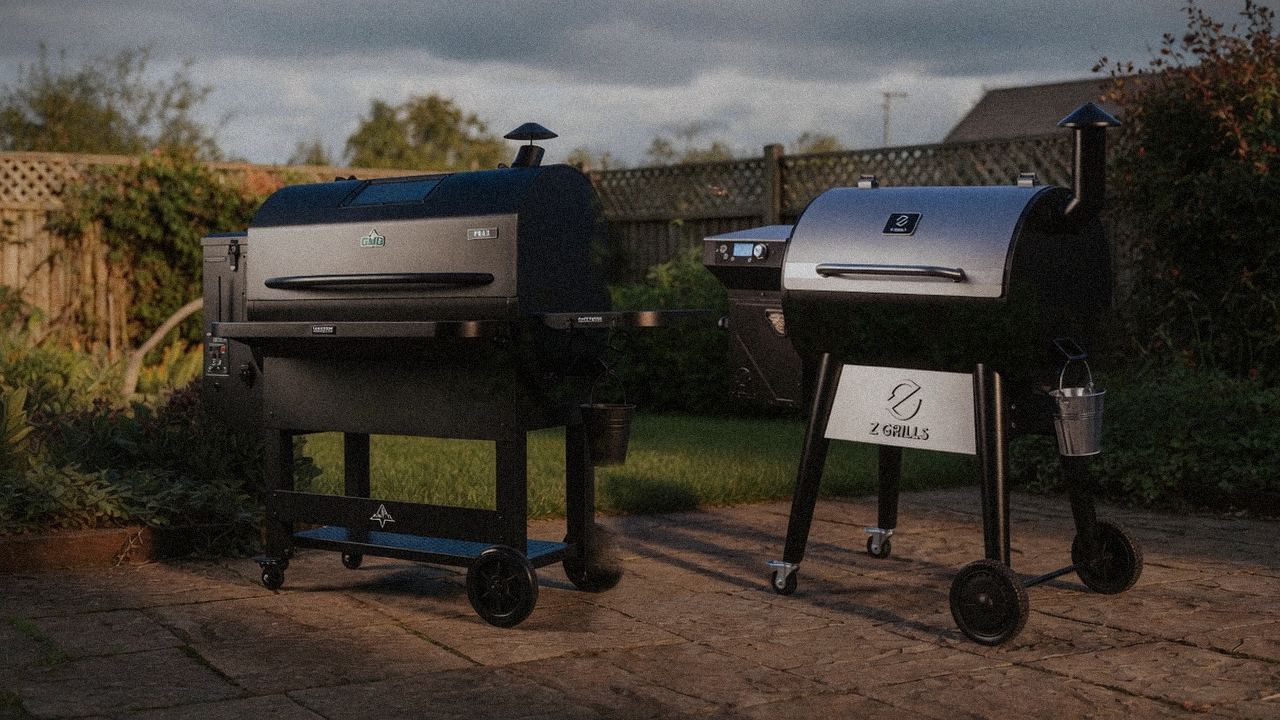
Here are the five current models side by side. A dash means the number is not in my verified data, and I do not guess.
| Spec | Z Grills 700 | Z Grills 450A | GMG Trek | GMG Ledge | GMG Peak |
|---|---|---|---|---|---|
| Price on file | n/a | n/a | $399 | $699 | $999 |
| Cooking area | 697 sq in | 459 sq in | n/a | n/a | n/a |
| Hopper | n/a | 15 lb | 10 lb | 19 lb | 19 lb |
| Max temp | 450°F | 450°F | 550°F | 550°F | 550°F |
| WiFi | No | No | Yes | Yes | Yes |
| Direct-flame sear | No | No | No | No | No |
| Portable | No | No | Yes | No | No |
| Warranty | 3 years | 3 years | 3 years | 3 years | 3 years |
Two rows deserve a second look. The sear row is all No, top to bottom: nobody in this fight opens a flame broiler, and GMG's own Peak carries a known caveat about high-heat searing without accessories. And the warranty row is a flat tie at 3 years, which is rare in these matchups and pushes the whole decision onto behavior instead of paper coverage.
Which holds temperature better?
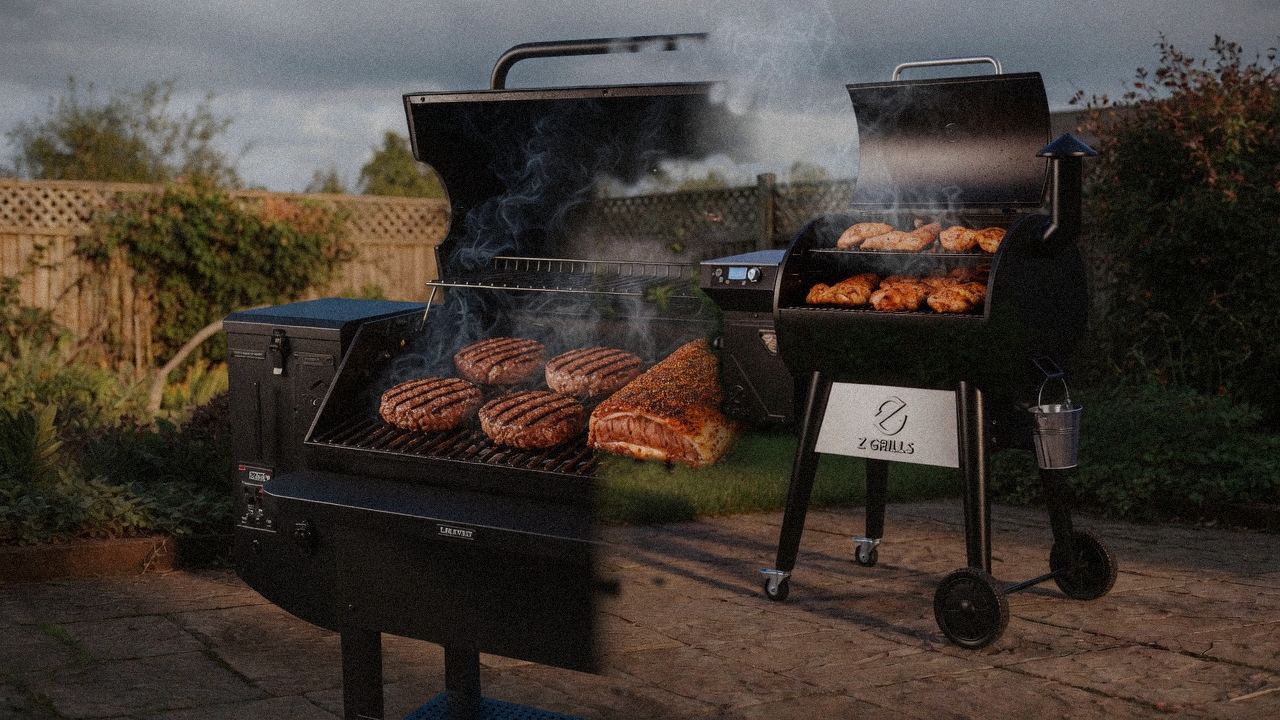
On my instrumented protocol, both Z Grills score 7.5/10 for temperature accuracy and 7.5/10 for stability, honest numbers for the money. The GMG models have not been through the same rig yet, so no score gets printed, and Trek owner reports of overshoots up to 100°F past setpoint make me cautious.
A 7.5 on my scale means the pit wanders within a range I will happily leave a brisket in overnight, and both the 700 and the 450A earned it with logged probe data, the method laid out on the how we test page. The 450A runs the more basic controller of the two, a known gap against newer PID versions, yet the logs came back the same.
Green Mountain is the asterisk. I cook on the Trek and the Ledge regularly and most days they behave, but I have not scored them, and the owner record includes real Trek swings, the kind where 225°F becomes 325°F while you fetch a beer. Until my protocol says otherwise, Z Grills holds the only printed temperature numbers here, and that asymmetry is itself information.
Who makes more smoke, and which is easier to live with?
The Z Grills 700 posts a 7.5/10 smoke score and the 450A a 7/10, real hardwood flavor from cheap machines. The GMG pair is unscored on my smoke protocol, so no number gets invented. On daily livability, the 450A's 8.5/10 ease score is the best mark either brand owns.
Every grill here makes smoke the same way, an auger feeding compressed hardwood into a firepot with a fan behind it, the design summarized on Wikipedia's pellet grill page. At low temperatures the brand differences narrow. What does not narrow is the daily experience, and that is where the Z Grills scoring table earns its keep.
| Model | Smoke | Ease of use | Cleaning | Efficiency | Value |
|---|---|---|---|---|---|
| Z Grills 700 | 7.5/10 | 8/10 | 7/10 | 7/10 | 9/10 |
| Z Grills 450A | 7/10 | 8.5/10 | 7/10 | 7/10 | 8.5/10 |
One dial, a probe port, no firmware. That is the entire Z Grills interface, and it is why the 450A is the grill I hand to relatives. Camp Chef attacks this same simplicity argument from a higher price bracket, and I break that down in Camp Chef vs Z Grills.
Is the Green Mountain app actually livable?
It is the best reason to buy GMG and the most complained-about part of owning one. WiFi comes standard on the Trek, Ledge, and Peak, with server-mode control from your couch, but connectivity dropouts and false low-pellet alarms recur in owner reports. Z Grills skips the argument entirely: no app exists.
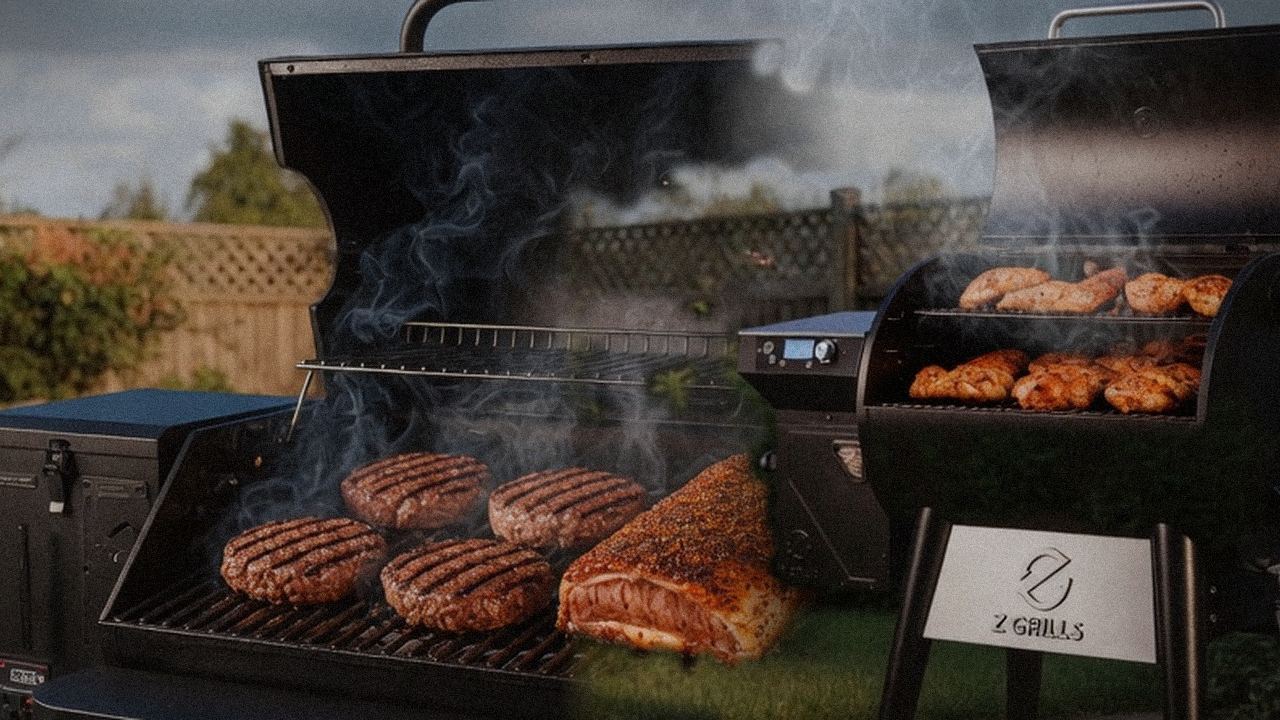
When the GMG app connects, it is genuinely useful. Setpoint changes from the couch, probe temps on your lock screen. Nothing Z Grills sells can do any of that, and for some cooks that fact ends the comparison.
The trouble is the word "when." App and WiFi unreliability shows up in reports on both the Trek and the Ledge, and the Ledge adds low-pellet alarms that cry wolf. A smart grill that drops connection mid-brisket is briefly dumber than a dumb one, because you trusted it and walked away. GMG's app is a real feature with a real failure rate; Z Grills' missing app is a real limitation with a zero failure rate.
Which is built to last?
Neither brand is heirloom steel, and the warranties agree at 3 years each. Z Grills' standing complaint is thin sheet metal, scored at 6.5/10 build on both models. GMG's record is worse in kind: rust under the Ledge's paint within months, plus igniter, auger motor, and motherboard failures.
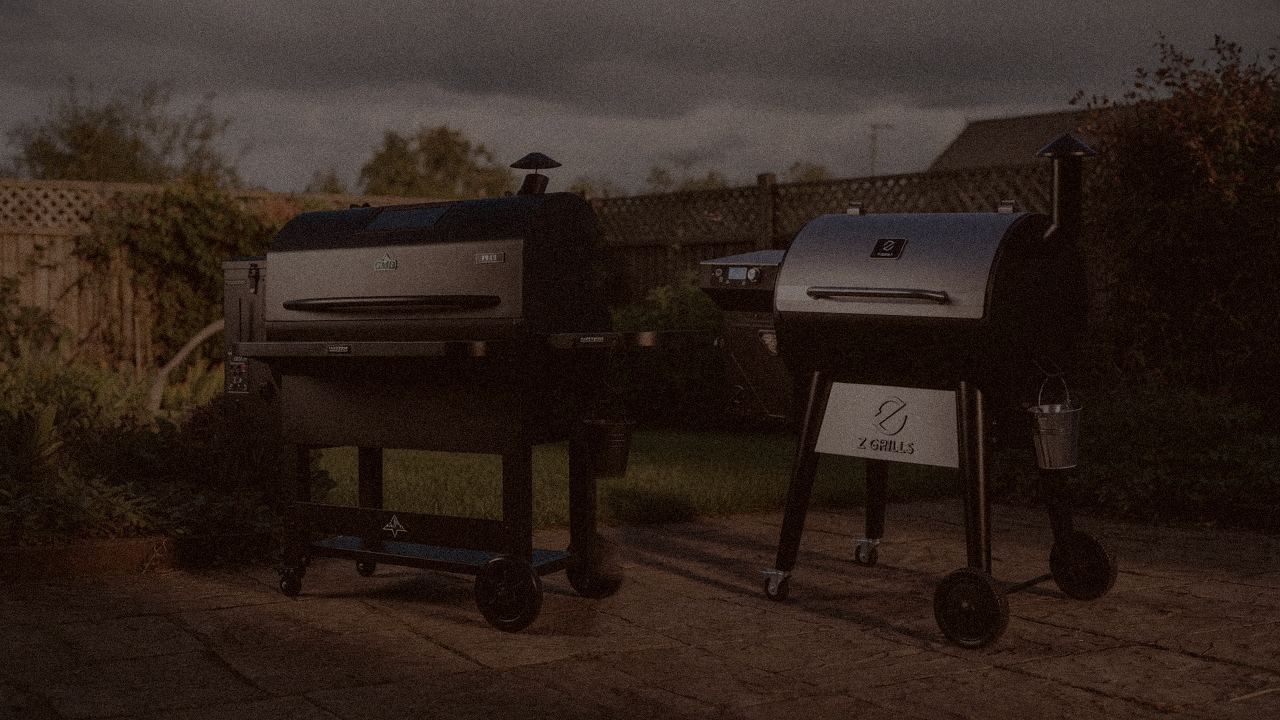
The Z Grills failure pattern is the cheap-grill pattern. Panels flex, an older thread mentions a controller hiccup or a lazy auger, and some 700 units have shown auger smoke or an overheat shutdown. Annoying, mostly small, mostly fixable with a part.
The GMG pattern bothers me more because it hits the expensive organs. Igniters dying after limited use on a Trek, motherboards and auger motors on the Ledge, control boards on the Peak, and rust forming underneath paint where you cannot catch it early. A 3 year warranty covers the part, not the ruined Saturday. Long-term data on the 450A is still thin, so I hold my verdict there, but between these two brands the component-failure list tilts against Green Mountain.
What do owners complain about?
Z Grills owners flag thin metal, older-thread controller and auger quirks, and the 450A's 15 pound hopper running tight on long cooks. GMG owners report Trek temperature overshoots, igniter failures, Ledge rust and motherboard deaths, and app connectivity that comes and goes.
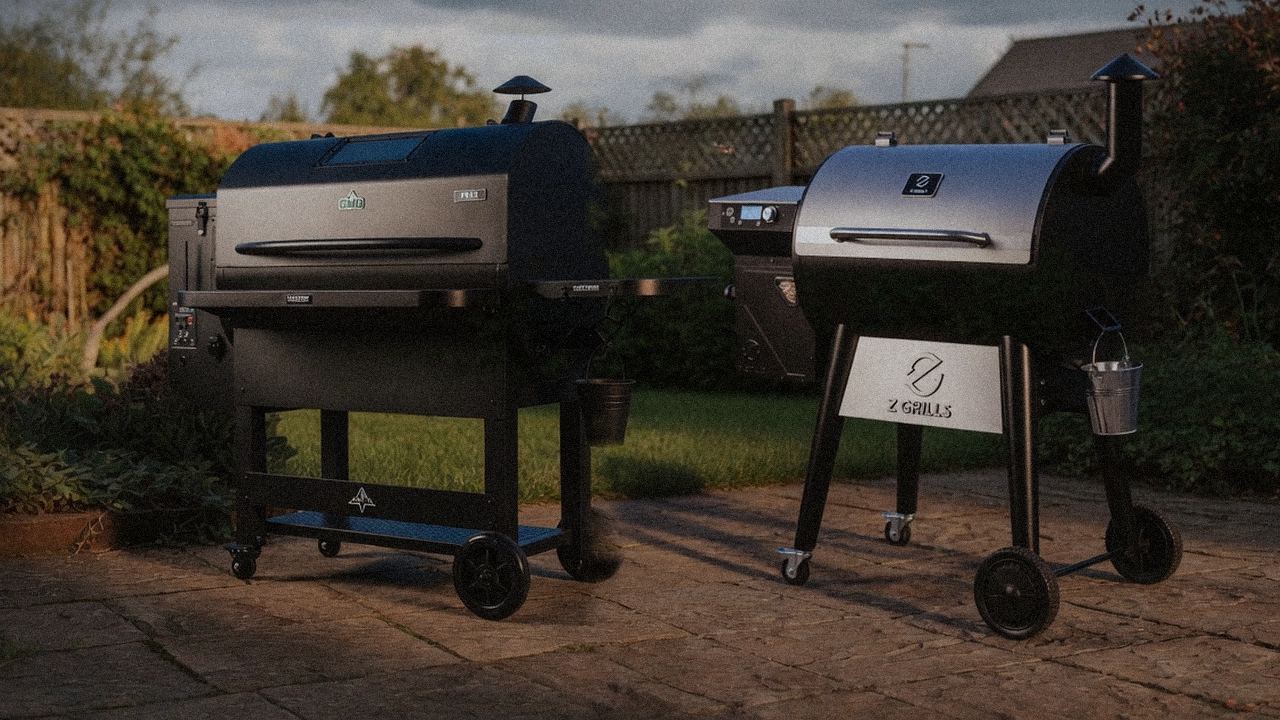
Read the two lists as personalities. Z Grills fails like a cheap simple machine. Green Mountain fails like a cheap complicated one, and complicated failures cost more patience per incident.
Which gives you more grill for your money?
Warranty math from verified numbers only: the Trek costs $133 per warranty year, the Ledge $233, the Peak $333. Z Grills street prices move too often to print, but the 700 delivers 232 square inches per warranty year and a 9/10 value score, the best in this matchup.
GMG publishes prices and hides behind no dealer haze, so their column is easy. Z Grills discounts constantly, so instead of a stale price I use the numbers that hold still.
| Model | Verified price | Warranty | Price per warranty year | Sq in per warranty year |
|---|---|---|---|---|
| GMG Trek | $399 | 3 yr | $133 | n/a |
| GMG Ledge | $699 | 3 yr | $233 | n/a |
| GMG Peak | $999 | 3 yr | $333 | n/a |
| Z Grills 700 | n/a | 3 yr | n/a | 232 |
| Z Grills 450A | n/a | 3 yr | n/a | 153 |
The Peak at $999 is the number that decides the brand fight for me. That is not budget money, and at that altitude the buyer should be reading a different article entirely. The Trek at $399 is the honest GMG bargain, WiFi and a 550°F ceiling in a truck-bed body, accepting a 10 pound hopper that will not run all night. Against that, the Z Grills value scores of 9 and 8.5 are the two best marks either brand posts anywhere in my data, which is why the 450A is my default pick for a first patio grill. For the record, my overall top pick lives outside this matchup entirely: the Weber Searwood XL leads the full pellet grills ranking, and you can check the current price if the budget has stretch in it.
Which one should a first-timer buy?
The Z Grills 450A. Its 8.5/10 ease score is the highest either brand earned, there is no pairing screen between you and dinner, and printed 7.5-grade temperature control means your first brisket rides a known quantity. A first-timer who tailgates every fall weekend is the one exception.
Your first ten cooks should teach you meat, not menus. The 450A's dial does exactly that, and its shortcomings are the kind you grow out of slowly: the 15 pound hopper gets tight on an overnight cook, the controller is the basic one, and you will eventually want more than 459 square inches. None of that bites in month one. The Trek asks a beginner to troubleshoot WiFi and trust a firebox with documented overshoots while still learning what normal looks like. That is a bad combination for a rookie, and it is the same reason I steer beginners carefully in Pit Boss vs Z Grills, where the budget question has a different answer.
Who should buy Green Mountain anyway?
Two people: the cook who genuinely wants app control at a budget price, since no Z Grills offers WiFi at all, and the tailgater, camper, or balcony griller who needs the Trek, the only portable in this fight. For them, GMG's quirks are the cost of a capability Z Grills simply does not sell.
I keep the Trek because nothing Z Grills makes fits in a truck bed and runs off a small inverter at a lake. If your cooking life happens away from a patio, the matchup is over before it starts. Same for the phone-first cook: GMG is the only brand here selling that experience. Just buy with eyes open about igniters and connectivity. GMG plays this same underdog-with-WiFi role against a bigger budget rival too, which I cover in Green Mountain vs Pit Boss.
Verdict: Green Mountain or Z Grills?
Z Grills wins the budget fight for the patio starter. Lower entry cost, the simplest controls in the class, printed 7.5 temperature scores, and the best value marks in my data at 9 and 8.5. Green Mountain is the right buy when WiFi matters at this price, or when only the portable Trek fits your life.
This is a fight between simplicity that works and features that mostly work. The 450A and 700 are boring in the best sense: they light, they hold, they cost little, and their complaint list is sheet metal and small parts. Green Mountain sells more ambition per dollar, a 550°F ceiling and an app on everything, then asks you to live with overshoots, igniters, and rust reports. On my patio the Z Grills gets the weekly call and the Trek gets the truck. If that split sounds right to you, you already know which one to order.
Is Green Mountain better than Z Grills?
Not for most budget buyers. Z Grills posts the printed scores, 7.5/10 temperature accuracy and stability and up to 9/10 value, with simpler controls. Green Mountain is better only where its unique features matter: WiFi standard on every model, a 550°F ceiling, and the portable Trek. Both carry 3 year warranties.
Are Green Mountain grills reliable?
The owner-report record is mixed. Trek reports include igniter failures and temperature overshoots up to 100°F; Ledge reports include rust under the paint, auger motor and motherboard failures, and false low-pellet alarms. The 3 year warranty covers parts, but expect to use it more than the spec sheet suggests.
How long do Z Grills pellet grills last?
The 3 year warranty is the only hard number I will print. Thin sheet metal is the recurring build complaint, both models scored 6.5/10 on build in my testing, and long-term reports on the 450A are still limited. Covered and cleaned, mine keeps running; I treat the lifespan as unproven rather than short.
Is the GMG Trek good for tailgating?
It is the only grill in this matchup built for it: truly portable, $399, WiFi on board, and a 550°F ceiling. The trade-offs are a 10 pound hopper that limits long cooks and owner reports of temperature overshoots and igniter failures. For parking-lot burgers and ribs, it is the obvious pick here.
Can you sear on a Green Mountain or Z Grills?
Not properly on either. No model in this matchup has a direct-flame sear system. The Z Grills pair tops out at 450°F and scored 5.5/10 in my sear testing; GMG reaches 550°F but the Peak is flagged as not ideal for direct high-heat searing without accessories. A cast iron pan inside is the workaround.